Your Custom Text Here
11/7 The Beginning (New) of the Chan Monastic Practice


This is the Chan/Zen fourth patriarch’s temple, Sizusi /四祖寺. SiZuSi (Si=Fourth, Zu=Patriarch, Si=Temple) was founded in 624 AD. SiZu or Master Daoxin taught Buddhism here for nearly thirty years and had around 500 disciples. He began the monastic community practice and promoted "Equal Emphasis in Sitting and Working" which was a change from the earlier Alms Begging practice. On another note, one of his disciples, Xinglu Falang became the founder of Korean Chan/Zen or Seon.
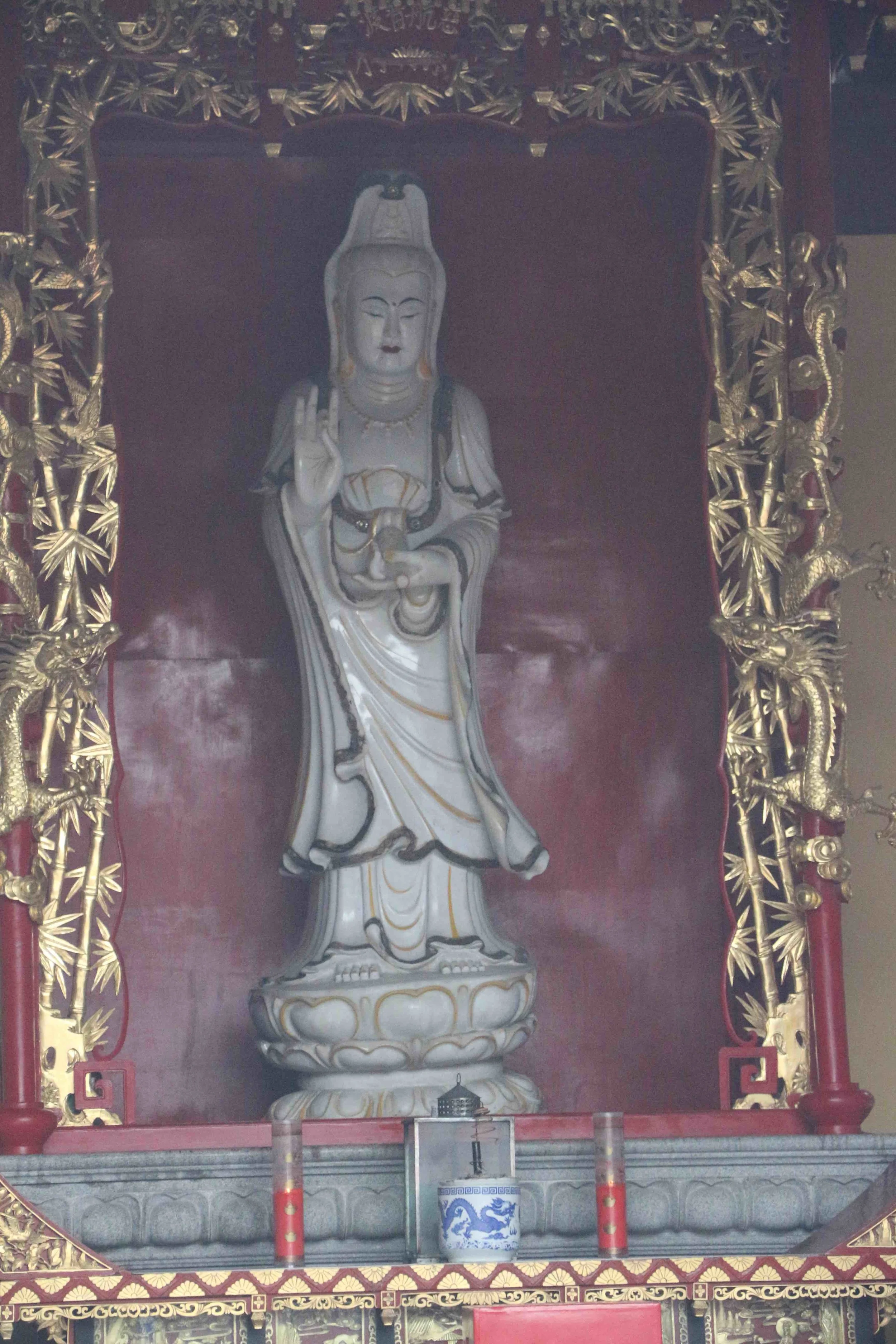


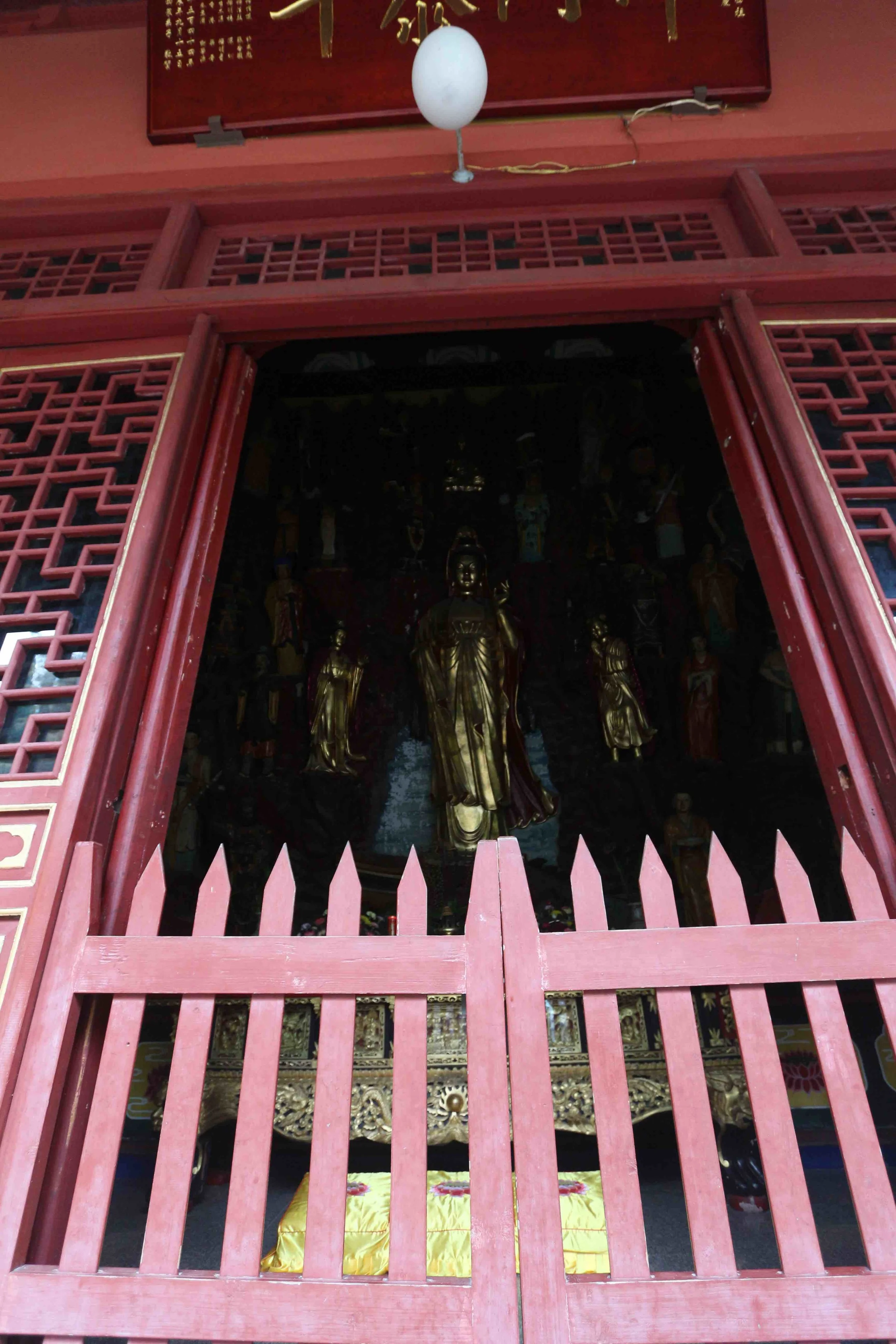
Above pics of the Temple Gate are Avalokitesvara Bodhisattva in the center flanked by two protective Vajra Lords, General Hen and General Ha.


Notice some of the external walls are painted with the green colors; they remind me a lot of the Korean temples that I visited. I could not take pictures of the Buddhas in the main hall so I took a picture of the 'description', The tree picture shown below is over one thousand years old.


Sizusi, Dahe, Huangmei, Hubei, China
11/2 JiangZhen, Abbot of DaMingSi, traveled to Japan to help establish early Japanese Buddhism


DaMingSi, 大明寺, was first built in 457-464 AD. The famous monk, Jiangzhen who was also a scholar in architecture and medicine traveled to Japan at the request of Japanese priests. There he established the Ristu Sect, one of six Buddhist sects in the ancient capital Nara Japan, built the temple Toshodai-Ji, and brought other cultural technology to Japan. JiangZhen or Gangjin (Japanese), he and other Chinese monks from his entourage undertook the ordination of Japanese monastics in 755 AD to help establish Japanese monastic sangha. An ordination platform was constructed for this purpose at Todai-Ji by the order of the Japanese emperor.
If you have visited Nara, you would recognize the resemblance of the temple and pagoda architectures. When I visited Toshodai-Ji and Todai-Ji in Nara, I never thought that today I would be connecting the dots with DaMingSi.
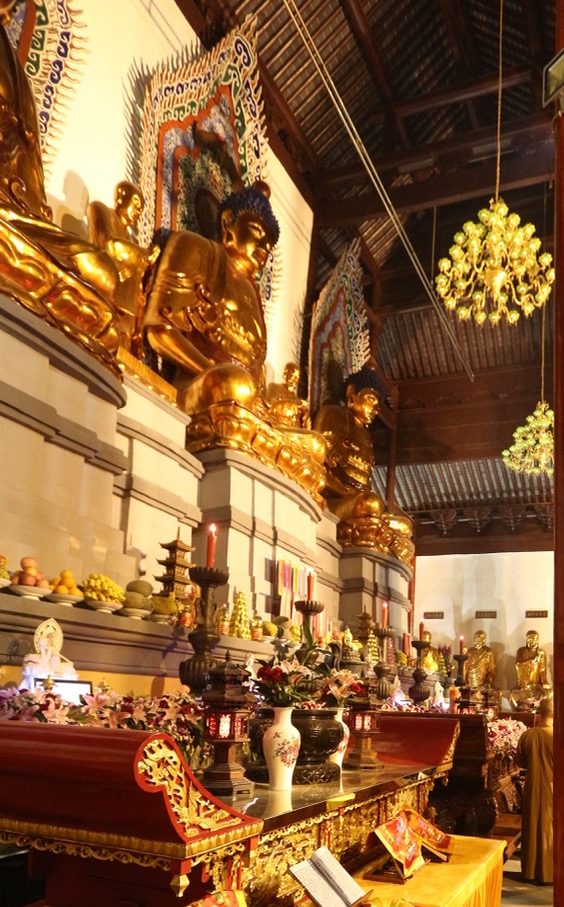


Side note; DaMingSi has a university where all their students must also learn traditional Chinese medicine, traditional Chinese music, along with two additional foreign languages, English and Japanese.
8 Pingshantang E Rd, Weiyang, Yangzhou, Jiangsu, China