Your Custom Text Here
11/11 CaoShanSi - CaoDong Chan/Zen's 2nd Temple
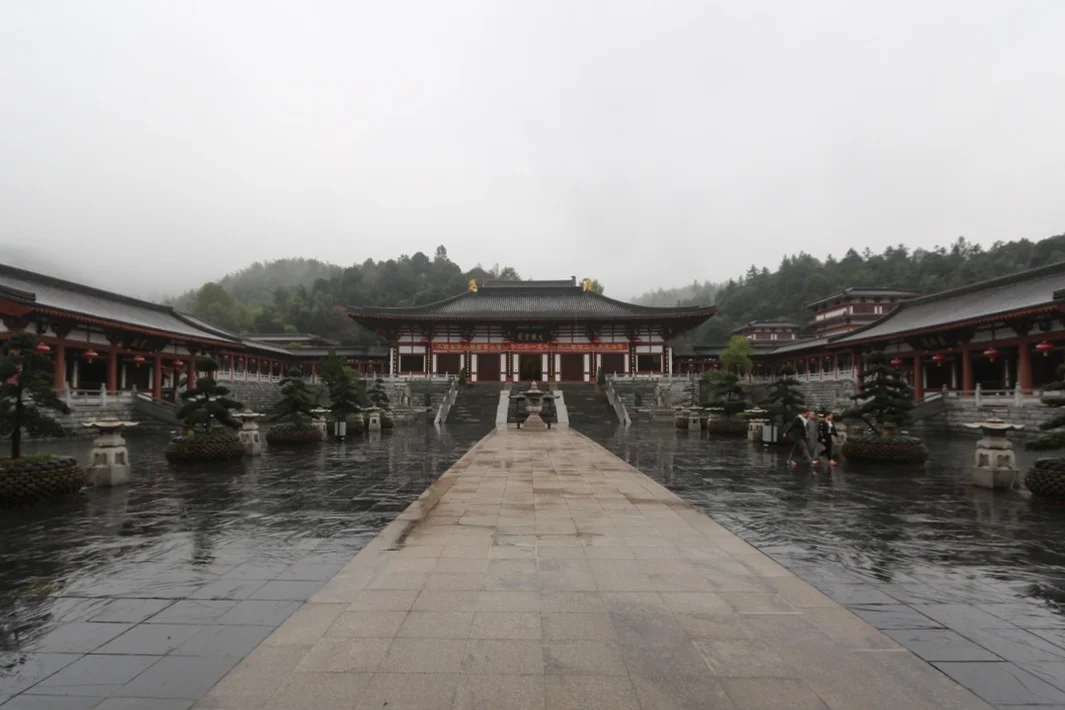
CaoShansi, 曹山寺, was established over a thousand years ago by CaoDong Chan/Zen’s founder’s disciple. In 2003 ShingLiang Fashi (Venerable) rebuilt this temple. This temple is currently being run by Bikkhunis.


Like other temples we’ve seen before, this one is also under construction. During our visit here, we were again invited to eat lunch. The volunteers and young bhikkhunis served us. Each temple has slightly different procedures for their guests. Here after we finished our meals, we left our bowls and chopsticks on the table as opposed to washing them as in the previous temples.


A very friendly German shepherd followed us all over. She played with us whenever we stopped to look around. One of her paws seemed to be have been previously injured and healed with a slight, hardly noticeable limp. I later saw another beautiful healthy husky missing a hind leg. It appears that people are leaving their injured pets here for the monastery to take care of them.


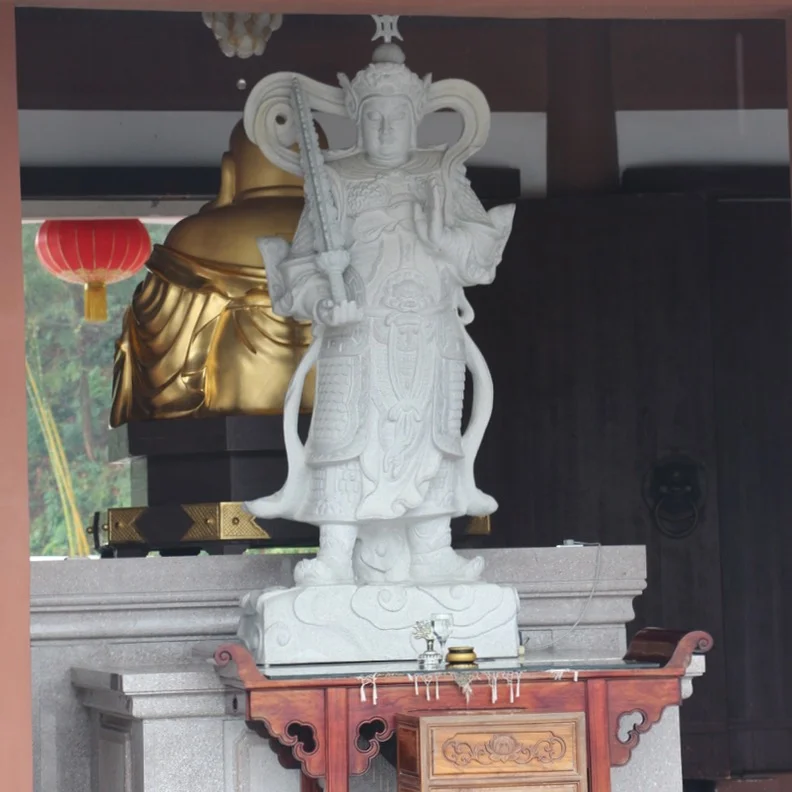

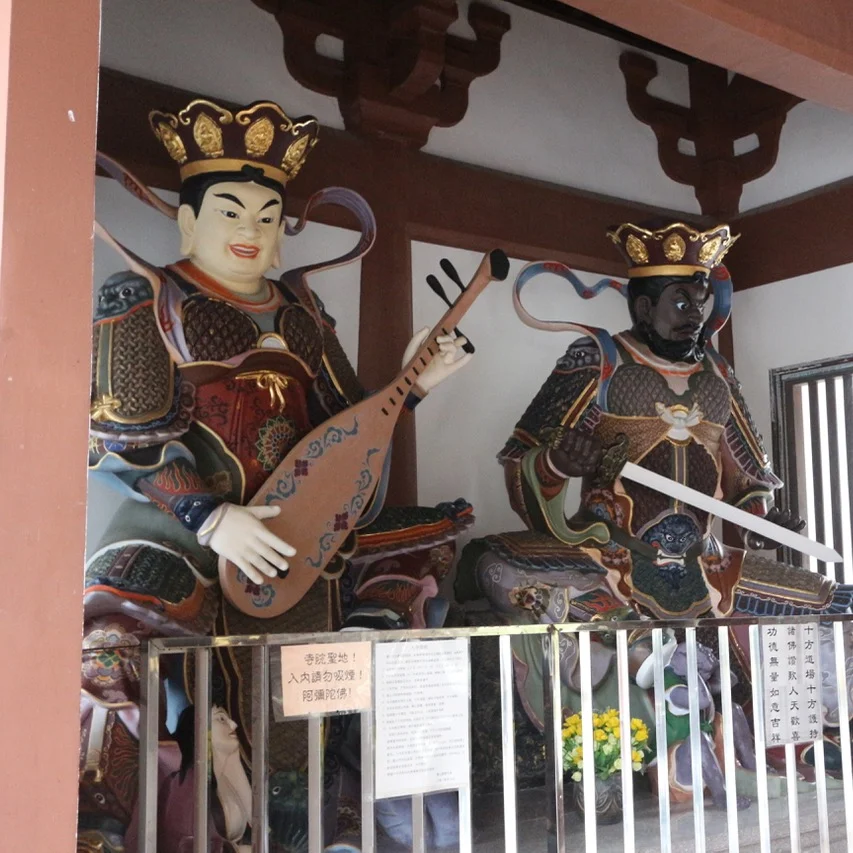


Yichun, JiangXi, China
11/11 Quiet Abode Temple of the Chan/Zen Seventh Patriarch

Jingjusi 净居寺 was built around 705 AD under another name. In 714, the temple was renamed to Anyin Si by Tang emperor. That emperor, before becoming one, had visited this temple to escape court intrigue. During the Song Dynasty in 1104AD the temple was renamed to its current name Jingjusi. The Cultural Revolution damaged or destroyed the majority of the temple.


The temple was rebuilt in mid 1980s. Upon entering the first thing we noticed is that the main hall is surround by water all around. The architecture is also very different from the other temples. The supports below the roof (think its officially called intercolumnar brackets) have painted golden dragon heads and phoenixes. These architecture are supposed to be representative of the local area.


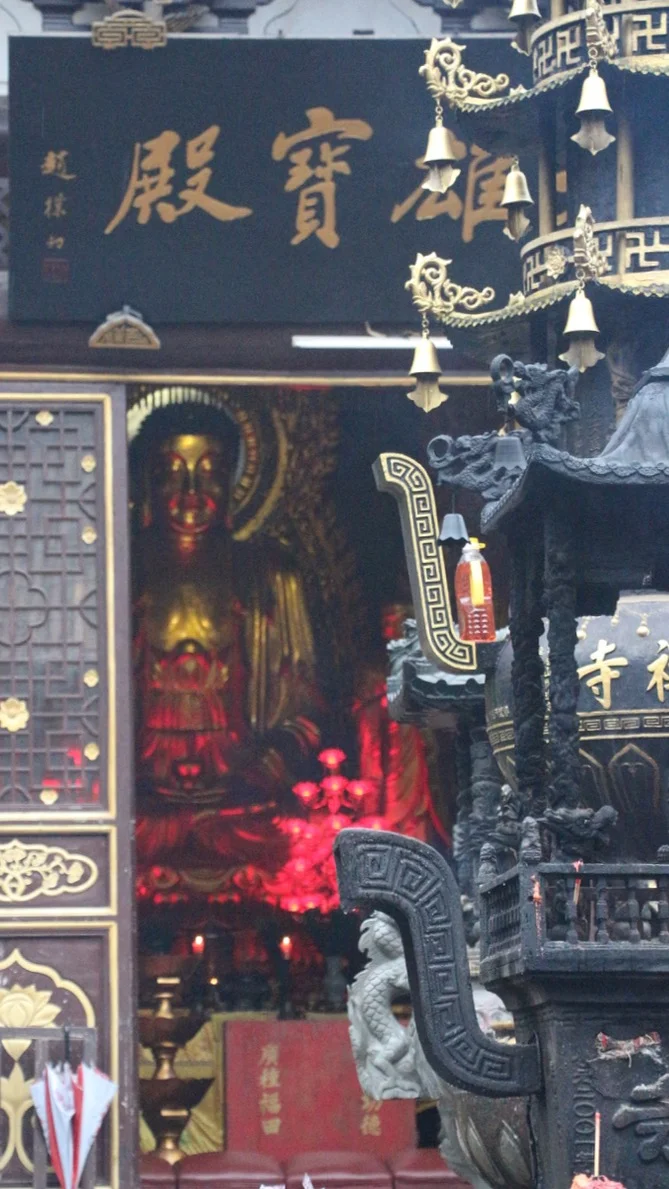


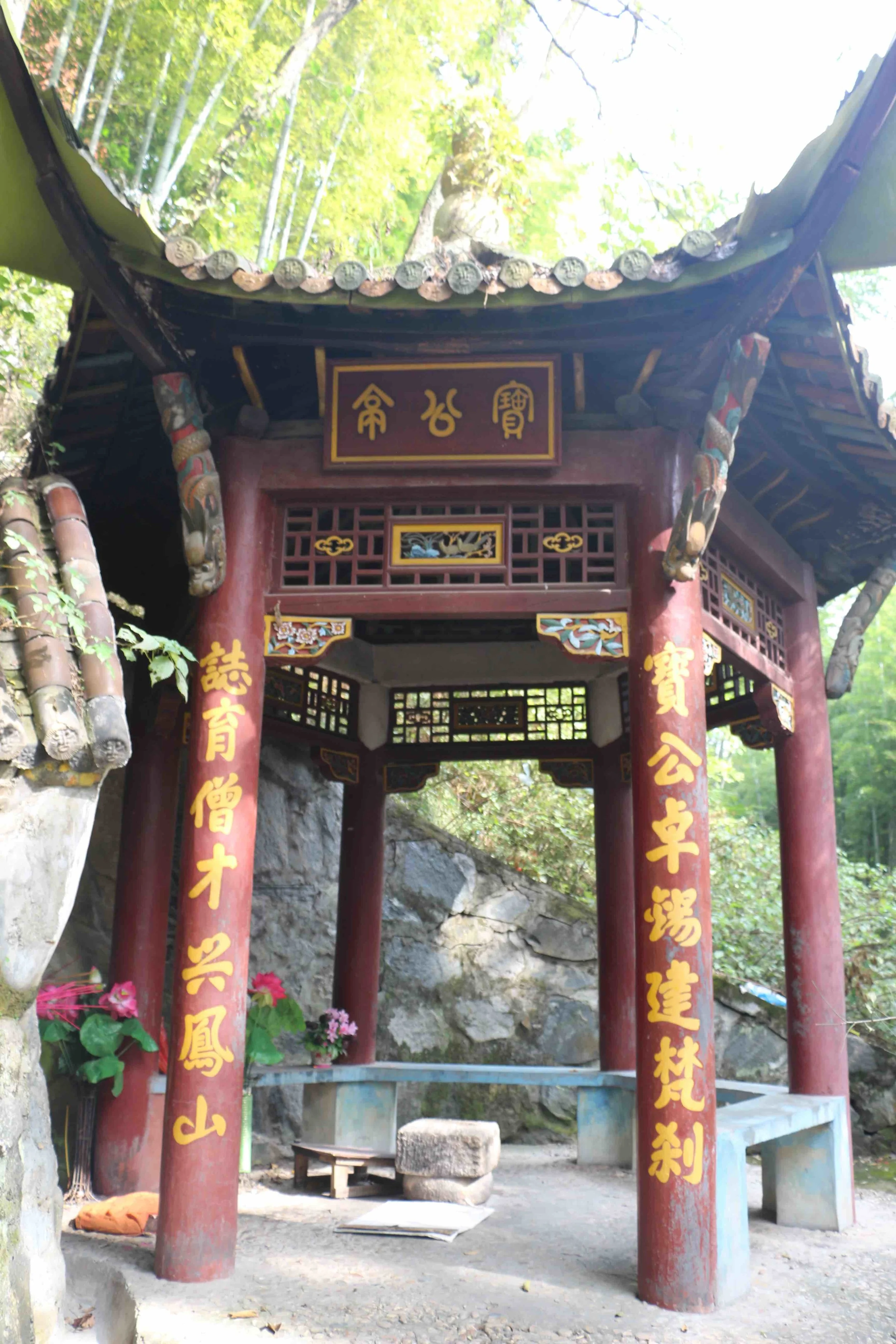
Temples dedicated to Zunti Bodhisattva or Cundi in Sanskrit became more prevalent as we visited temple further south and southwest. See the picture below.

Toward the back of the temple complex is the Qizu Tower memorial (Qi=Seven, Zu=Patriarch) or seventh patriarch's memorial, originally built in 740AD, which houses Qizu Xingsi’s body. It was rebuilt in 1990 based on the original appearance.


742 County Rd, Qingyuan, Ji'an, Jiangxi, China, 343009
11/10 Important Crossroad Temple Youminsi saved by HK's Po Lin Monastery

First built in 503, Youminsi, 佑民寺, has been rebuilt seven times and its name was changed many times as well. It was bombed in 1912 and rebuilt in 1927, funded by a Nanchang local, Yao Jumei, who suggested to name the temple “Youminsi or Yauman Temple in Cantonese.”

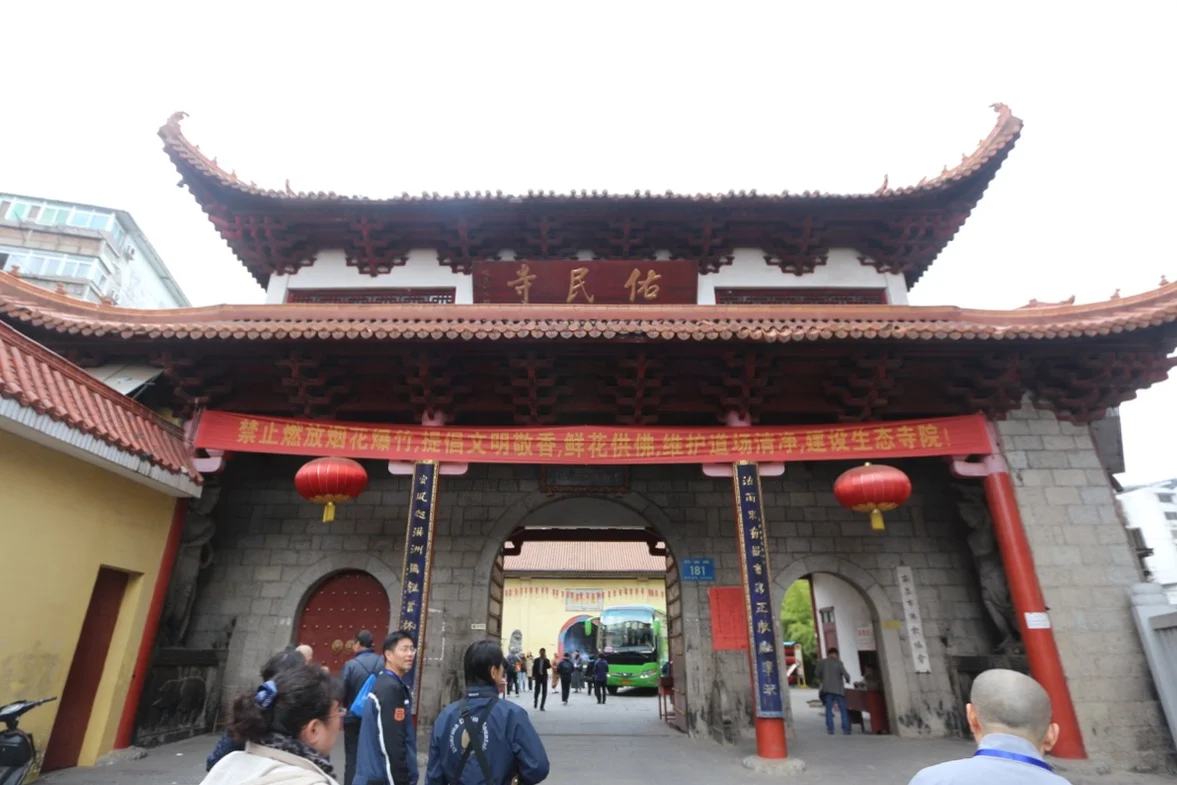

During the cultural revolution this temple was mostly destroyed or utilized for other purposes. The temple grounds have been partially recovered to what it is today. A lot of land are now apartments and cannot be recovered. 90 percent of the rebuilding funds came from Hong Kong’s Po Lin Monastery. The current abbot stated that they would not have been able to rebuild without them.


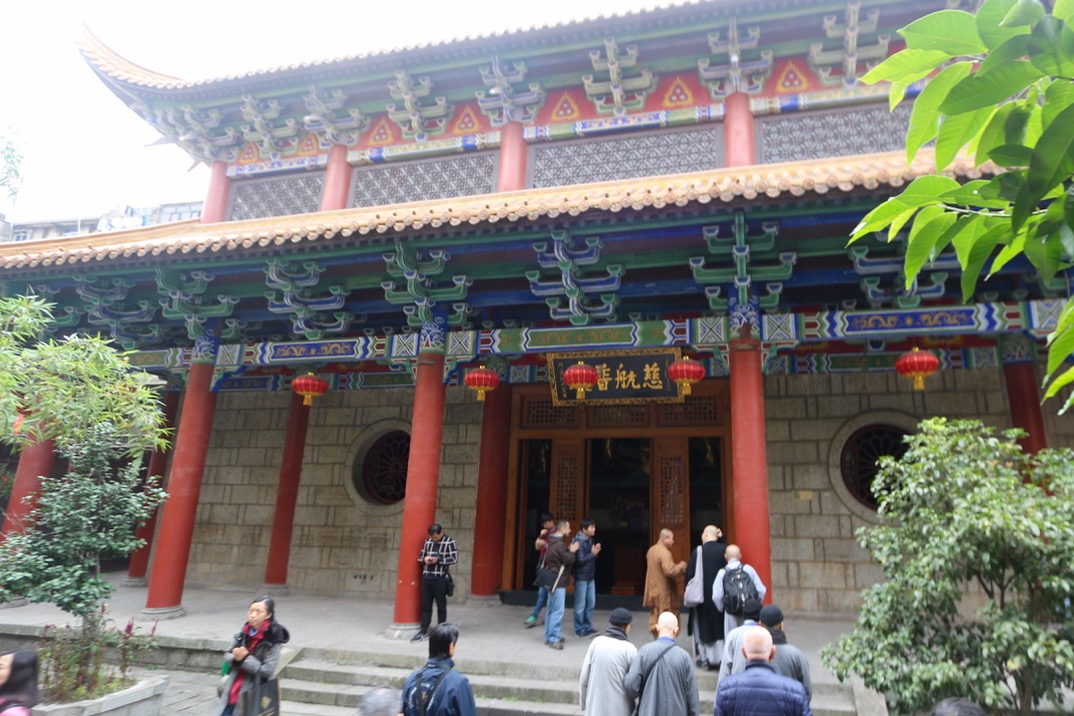


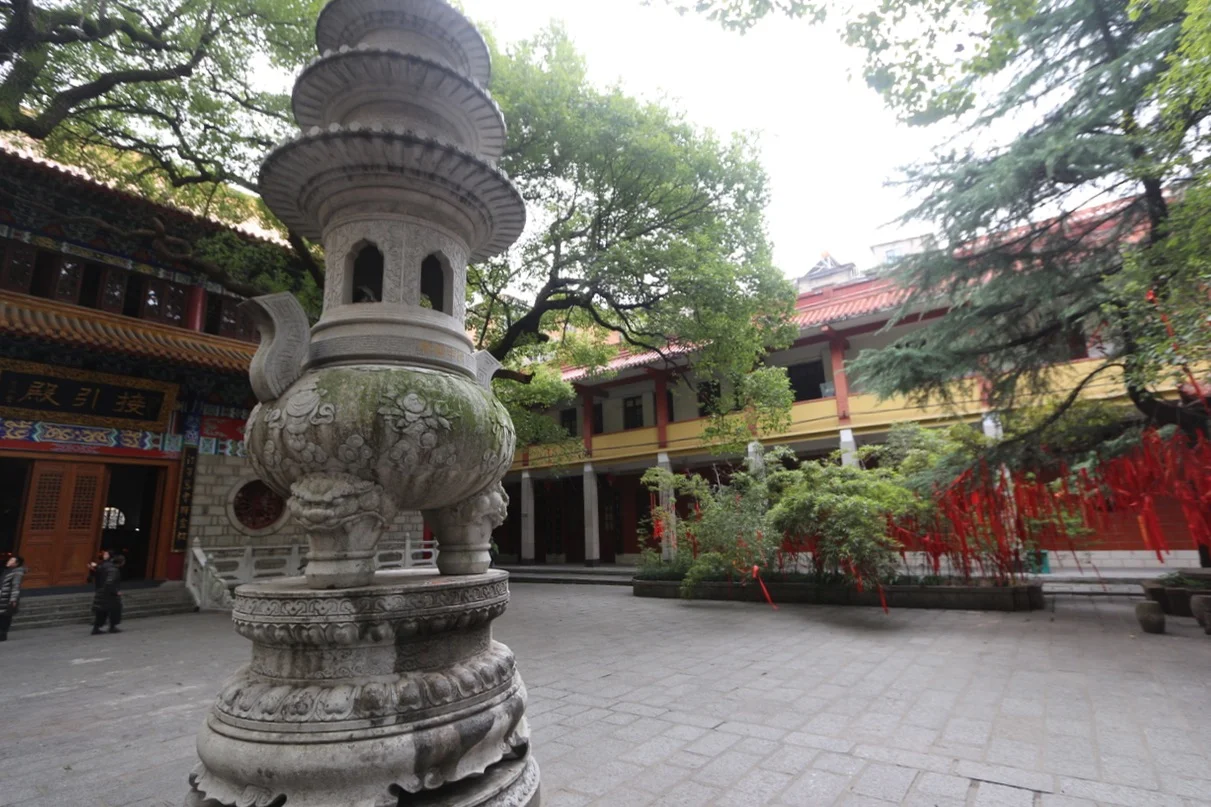

This is another crossroad temple where many famous masters came and gone. Monks from all over have come to this temple, Korea, Tibet, etc. Ma Tsu, the eighth Patriarch of Chan also practiced here for over a dozen years. At that time the Chan he practiced was called Hong Zhong Chan.


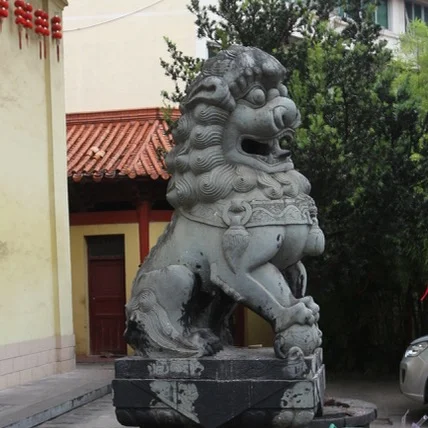


No.181 Minde Rd., Donghu, Nanchang, Jiangxi, China
11/10 Origin of the Caodong School (Soto Zen)

Pulichansi, 普利禅寺, was first built in Tang Dynasty over a thousand years ago. This is the original temple for Caodong School. It was recently rebuilt in 2010 and completed around 2013. This new construction also includes a divinity school.


It has traditional Tang style architecture in the temple ground and also a very modern feel. The Buddha’s sculpture is white and looks more like what you may find in Southeast Asian temples.

There were Korean writing hung on walls of certain buildings. I discovered that practitioners of Korean Caodong Zen/Chan school have come and supported in the re-building of the temple.
I was pleasantly surprised to find that the temple commemorates Late Master Nan Huai Jin. He initiated and gathered funds to renovate this temple. Master Nan is renown and was considered a modern Chinese scholar treasure in Buddhism and Taoism; he’s written many books. While I am studying with Dharma Drum Mountain as a Zen/Chan practitioner, I am also a student of Master Nan Huai Jin, though not directly.


Pulichansi, Dongshan, Tong’an, Yifeng, Jiangxi, China
11/9 Linji Zen’s Original Temple (Rinzhai & Obaku Zen)

Huangbo Chansi, 黄檗禅寺, is the original temple for the Linji School. It was built more than 1,200 years ago in Tang Dynasty. Around 1000 years ago during the Sung Dynasty, Linji Chan school was brought to Japan, called Rinzhai.


We got here really late so couldn't get many pictures. You can see from the pictures that this temple is also under construction. The new buildings are painted yellow. We only had enough time to visit the older temple space, very likely the first rebuilt after the cultural revolution.
A note about the Linji lineage, late Master Sheng Yen of Dharma Drum Mountain was part of the Linji lineage. Master Thich Nhat Hanh is also of Linji lineage.
As mentioned for the earlier temple, BaiZhangChanSi, Prince Li Chun (personal name) escaped the political turmoil by leaving the capital Xian to BaiZhangChanSi. Then he came here, Huangbo Chansi.

The roads were still under construction and very muddy. The bus slipped here and there, the driver was astute.


Yifeng, Yichun, Jiangxi, China
11/9 Institute Monastic Rules of Conduct
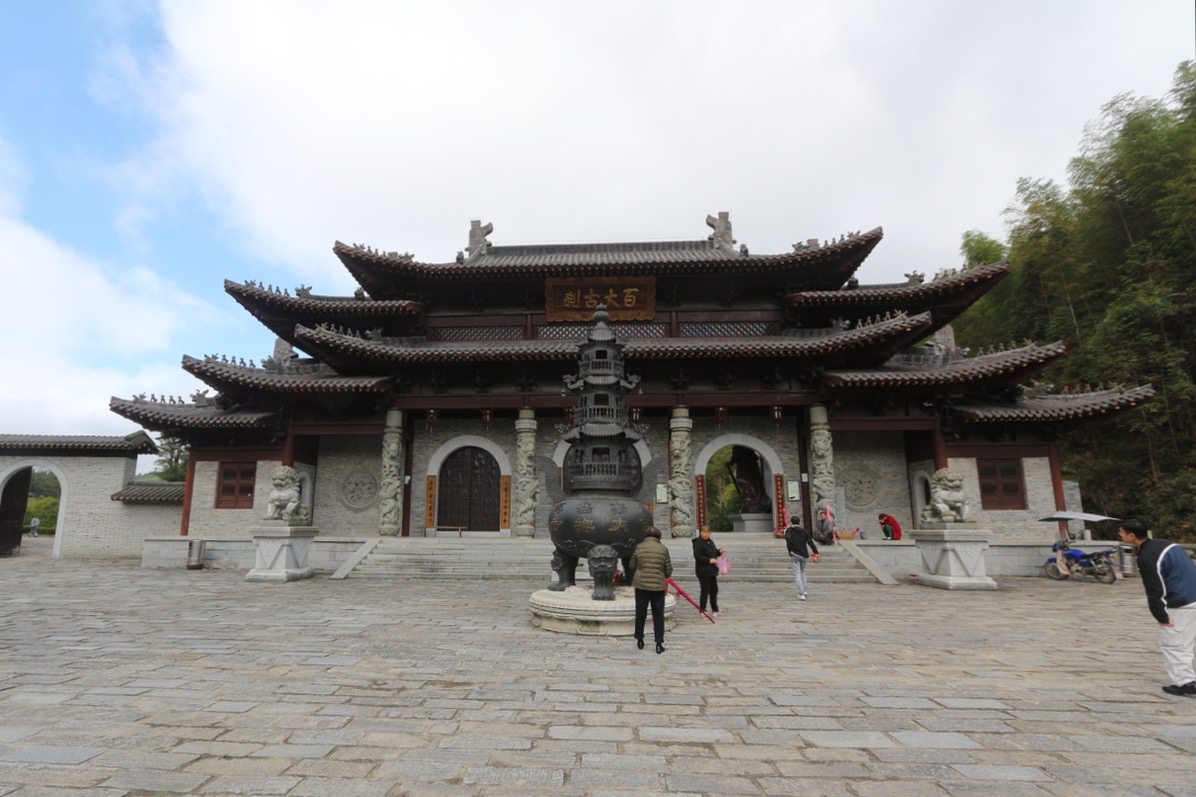


BaiZhangChanSi was built more than 1,200 years ago in the Tang Dynasty, again up high into the mountain amongst the mists. Master Huahai, ninth patriarch, who presided for over twenty years at this temple, officially wrote down the rules of conduct for the monastics. His rules were taken by the Emperor, who spread the rules across the country as a code of conduct for Buddhist monasteries.


At around 800 AD, prior to being Emperor XiangZong of Tang Dynasty, Prince Li Chun (personal name) escaped from the capital Xian to this temple and became a novice monk. The distance he traveled to was almost 750 miles. He subsequently went to Huangbo Chansi, the next temple that we are going to visit.

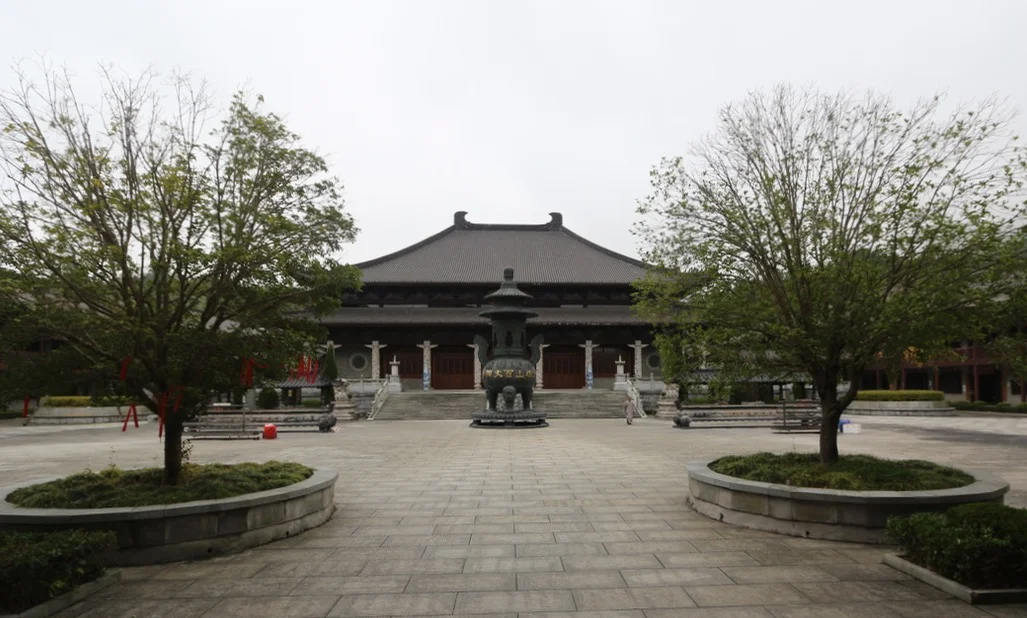
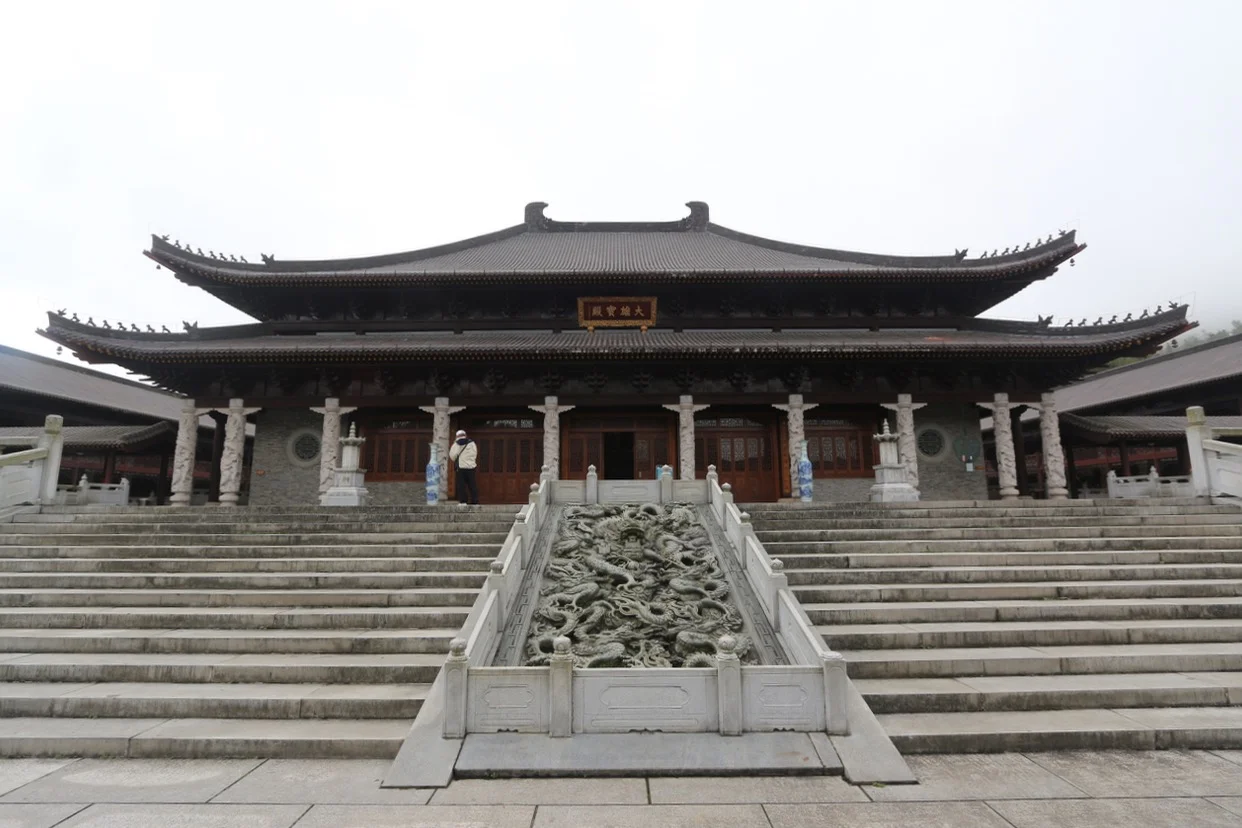


We ate at a temple, our third or fourth time. Long thin wooden tables set parallel in large room with just enough room except the center walkway acting as dividing line between the men and the women. No spare wood was wasted on the long thin backless bench as I almost tipped backwards when I sat down. With two metallic bowls and a pair of chopsticks already set, a volunteer distributed down the row rice, vegetable, and soup. We ate quietly, washed the dishes, and set them in a bucket to be sanitized.


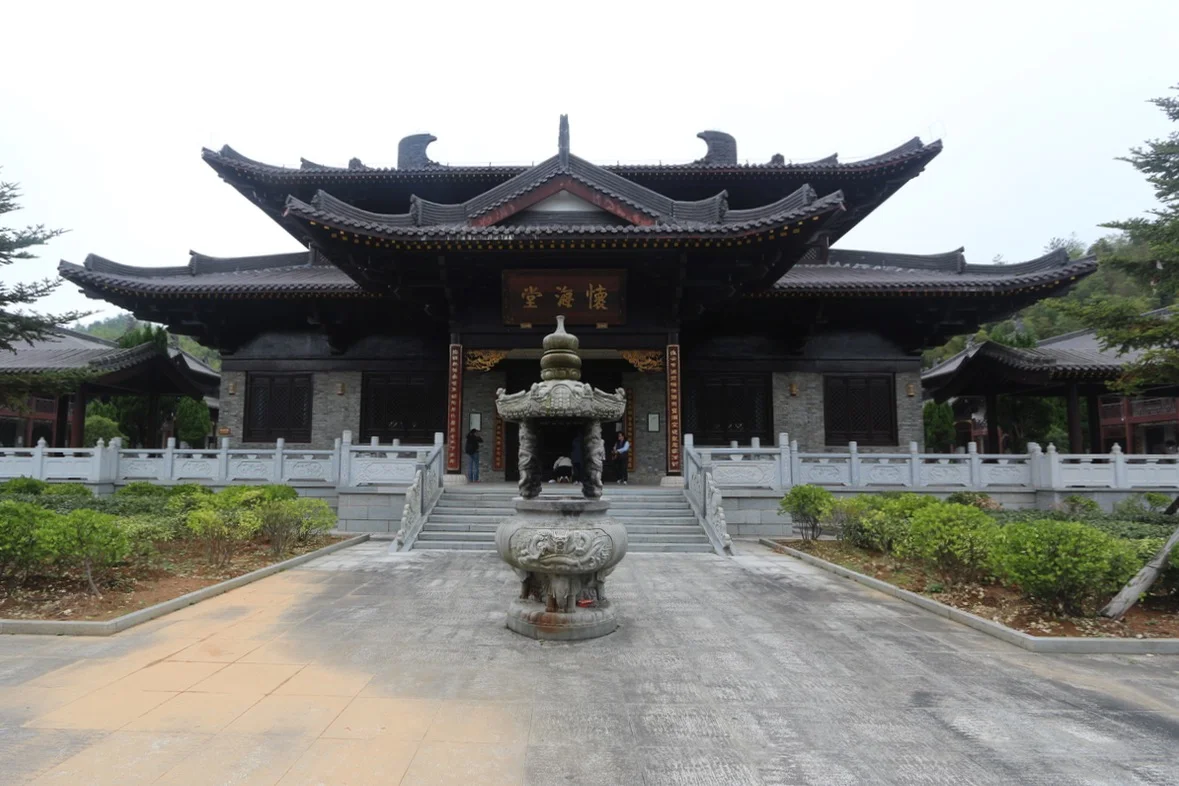

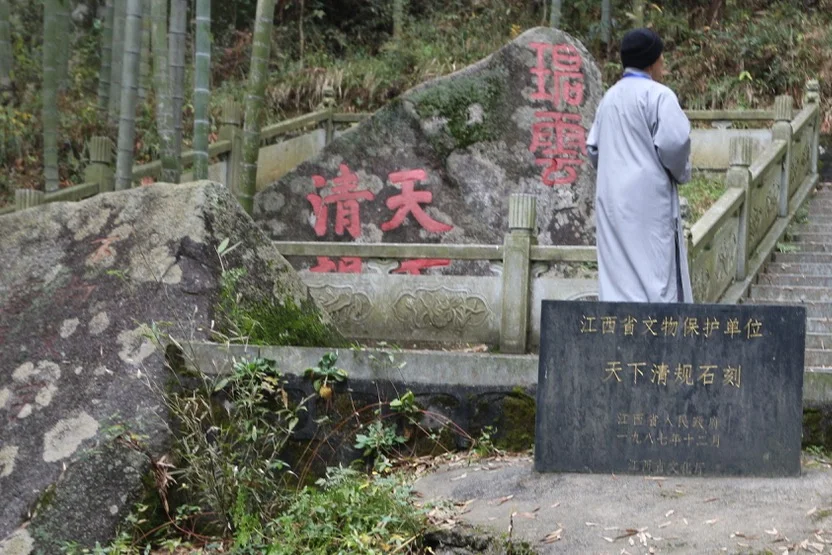
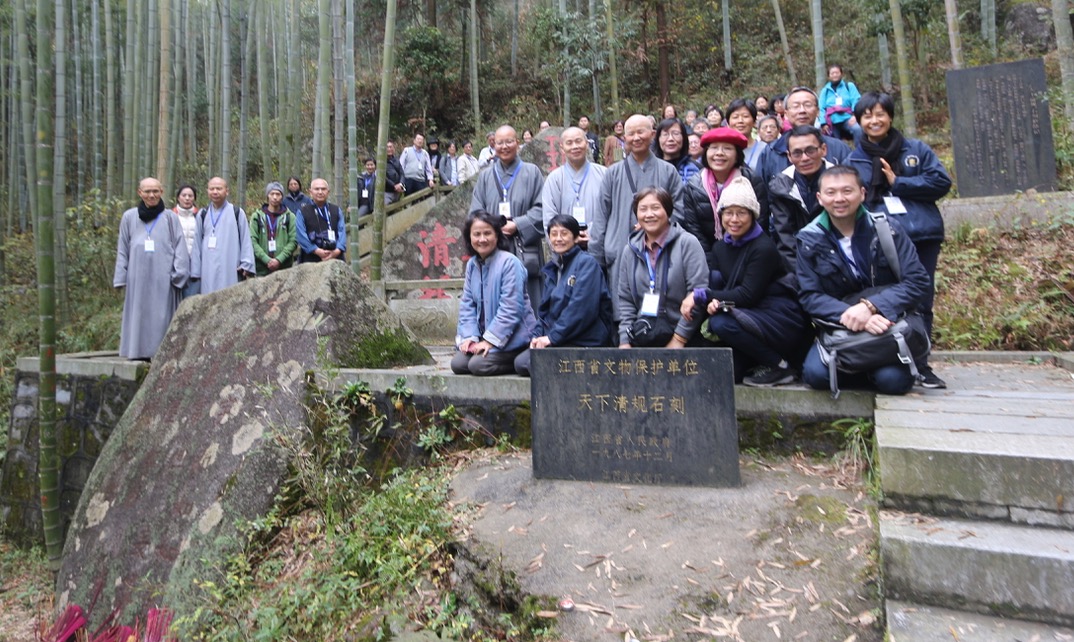
After the meal we visited historic sites located in the bamboo forest behind the temple complex. I've posted the description of each historic site as well.




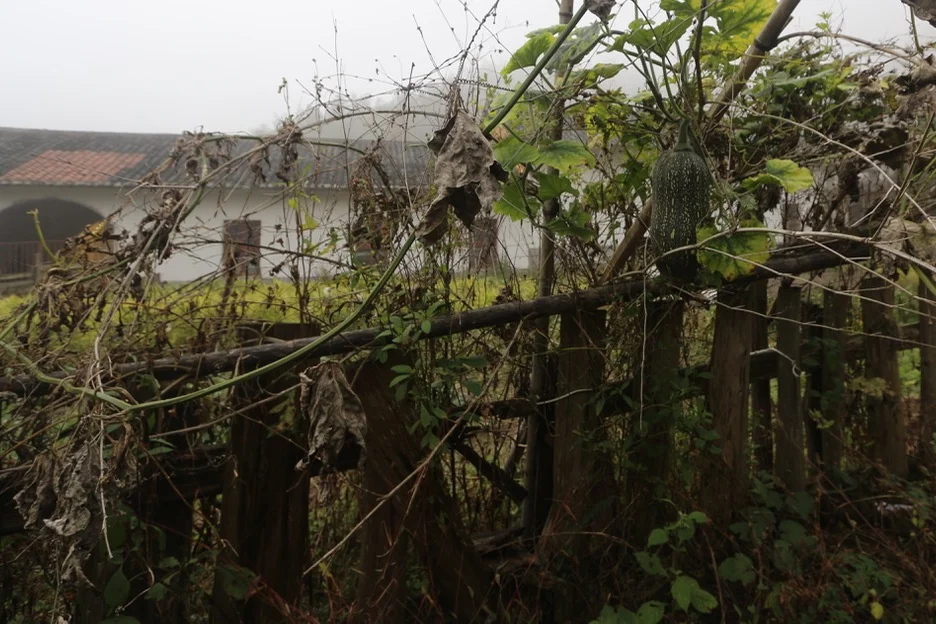

In the pic below, we saw this dog going about her way. When we tried to feed her some bread she was eager, but as soon as the abbot of the temple walked close, she acted as if she's disinterested. We inquired her, the abbot told us that he saved her around ten years ago. This "smart" dog came by to say hello again as we were leaving.


Baizhangchansi, Fengxin, Yichun, Jiangxi, China
11/8 DongLingSi the 2nd

This is the second temple from Donglingsi, the temple visited prior day. The Donglingsi temple 1 was under lots of construction however that temple is located up in the mountains. Donglingsi temple 2 is the new sister temple that's around a half hour plus drive away but closer to the populace.


Do you know who Ashoka was? Just in case you don't, his Indian empire around 250 BC stretched from Bangladesh through most of subcontinent of India and reaching through Afghanistan and Central Asia. He is credited for spreading Buddhism throughout his realm and beyond. The Ashoka pillar was in many of the photos earlier.




11/8 Temple of the Eighth Chan/Zen Patriarch, Mirror and Brick

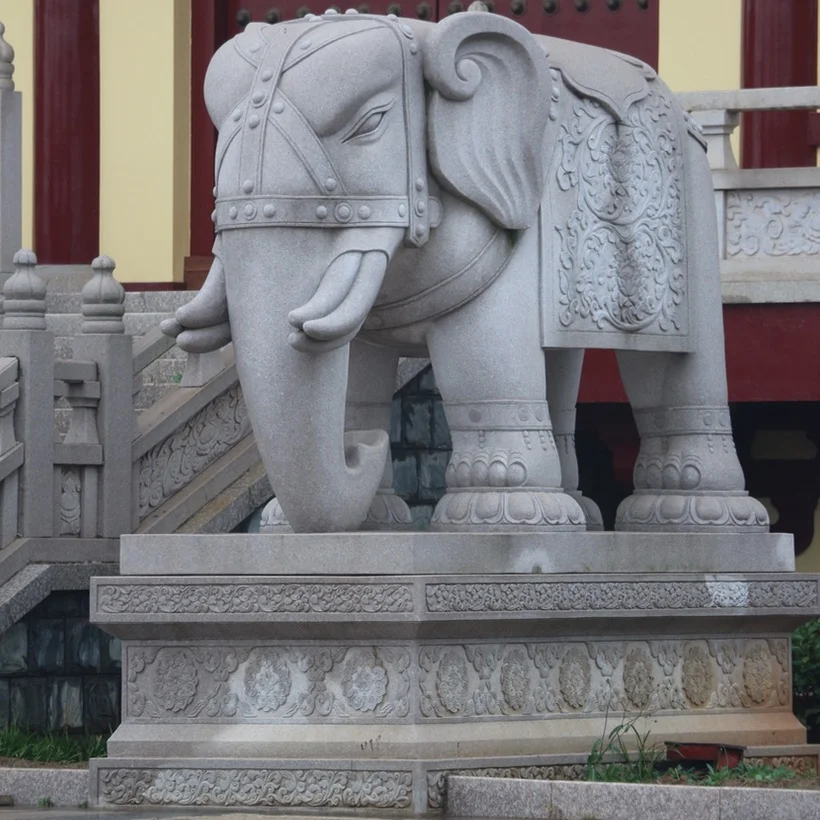
This temple, 宝峰寺BaoFengSi, built over 1200 years ago, was the home of the eighth patriarch Master MaZu DaoYi. Manu DaoYi was renowned as one of the most influential teachers of the Chan school. He’s famous for using the koan.


An key story about Master MaZu was when he was a young monk, he sat for days meditating. His teacher, the Seventh Patriarch Master HuaiRang, asked Master Mazu why he’s sitting there for days on end? Master Mazu answered that he planned to sit there until enlightenment. His teacher then sat down next to him and began polishing a brick without end. Master Mazu asked his teacher why he’s polishing the brick, to which his teacher replied that he planned to polish the brick into a mirror. Master MaZu said there is no way to make a brick into a mirror. To which his teachers answered there is no way you can achieve enlightenment just by sitting… Have fun digging into that story. We'll visit the mountain where the "mirror" event occurred as well.

Baofengchansi, Baofeng, Jing’an, Yichun, Jiangxi, China
11/8 Master Shu Yung, Continuity through turbulent times


First built in Tang Dynasty over a thousand years ago, Zhenrusi was rebuilt in Ming Dynasty and destroyed in the Sino-Japan War. Master ShuYung who lived from 1839 till 1959 and practiced at this temple experienced four dynastic changes in China, from the Qing Dynasty to today’s People’s Republic of China. Squeezed in between were Europeans’ sphere of influence and Japanese invasion. Throughout the wars and political turmoils, he played an instrumental role in keeping, maintaining, and passing on the Chinese Buddhist practice and tradition to our current generation.

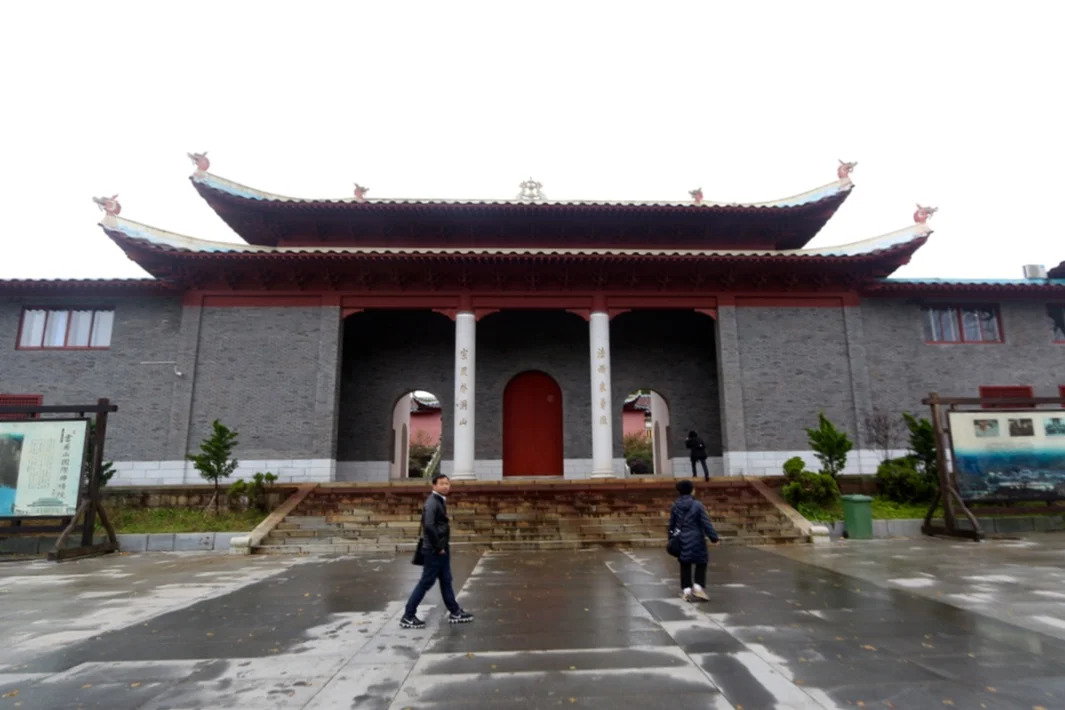


Zhenrusi is a Weiyang Chan school, another distinct lineage. The distinction of this school is the emphasis on esoteric practice.


Yunjushan, Yongxiu, Jiujiang, Jiangxi
11/7 Western Forest Temple


西琳寺 Xilinsi (Xi=West) was built in 376, just less than a score years earlier than Donglinsi, the other temple we visited earlier in the day with the massive construction. In fact, Xilinsi and Donglinsi are the East and West Forest Temples founded by two monastic brothers. Xilingsi is well known as many famous writers visited Xilinsi and wrote poems about it. The most famous one is Sushi’s Tixilinbi.

MASTER JUCHAI (BIKKHUNI)
Master Juchai (Bikkhuni), a monastic from Taiwan came to the temple and found it completely dilapidated. She raised money to renovate and came to lead this temple in 1989 and renamed the temple from 西林寺 to 西琳寺. In 2002 during a previous pilgrimage, Master Juchai were raising young orphan girls in her temple. Due to China’s one child policy and outdated Chinese cultural preference of boys, baby girls were orphaned so that families can try for a boy.
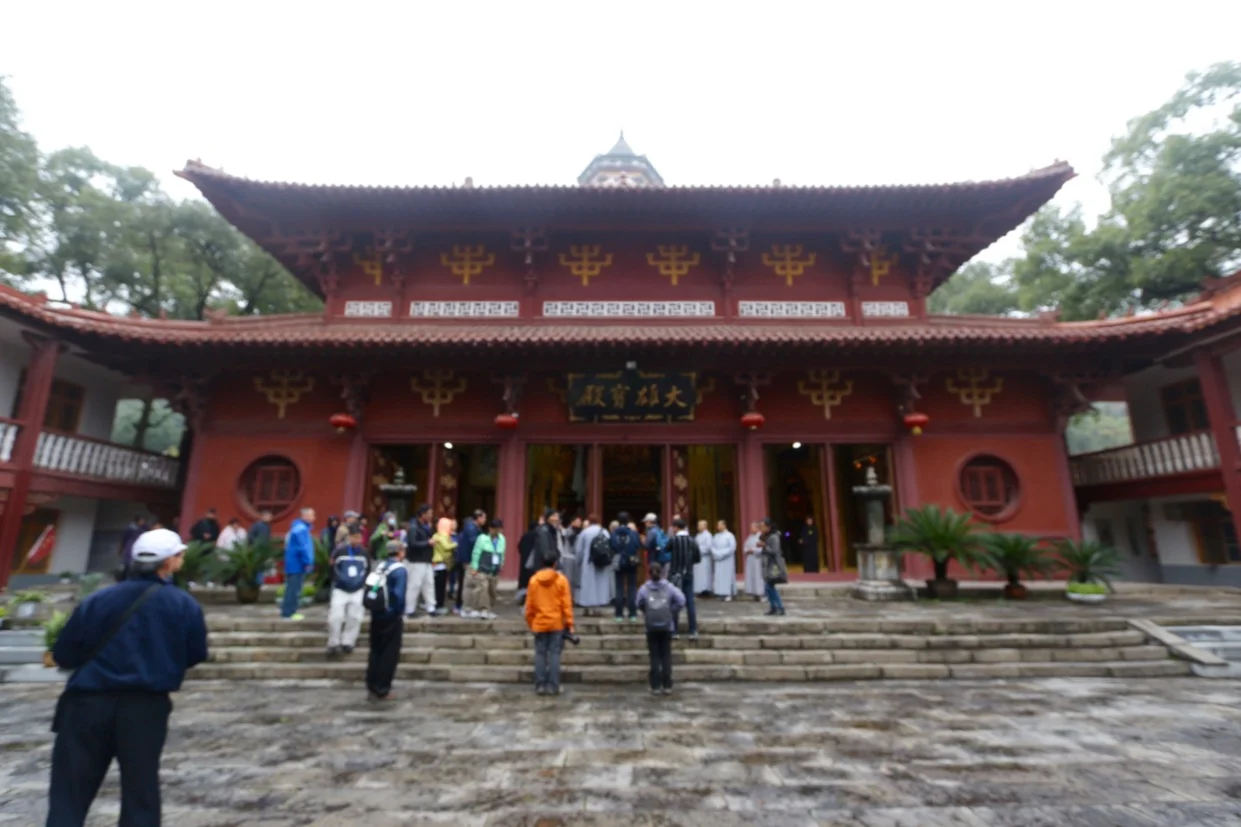


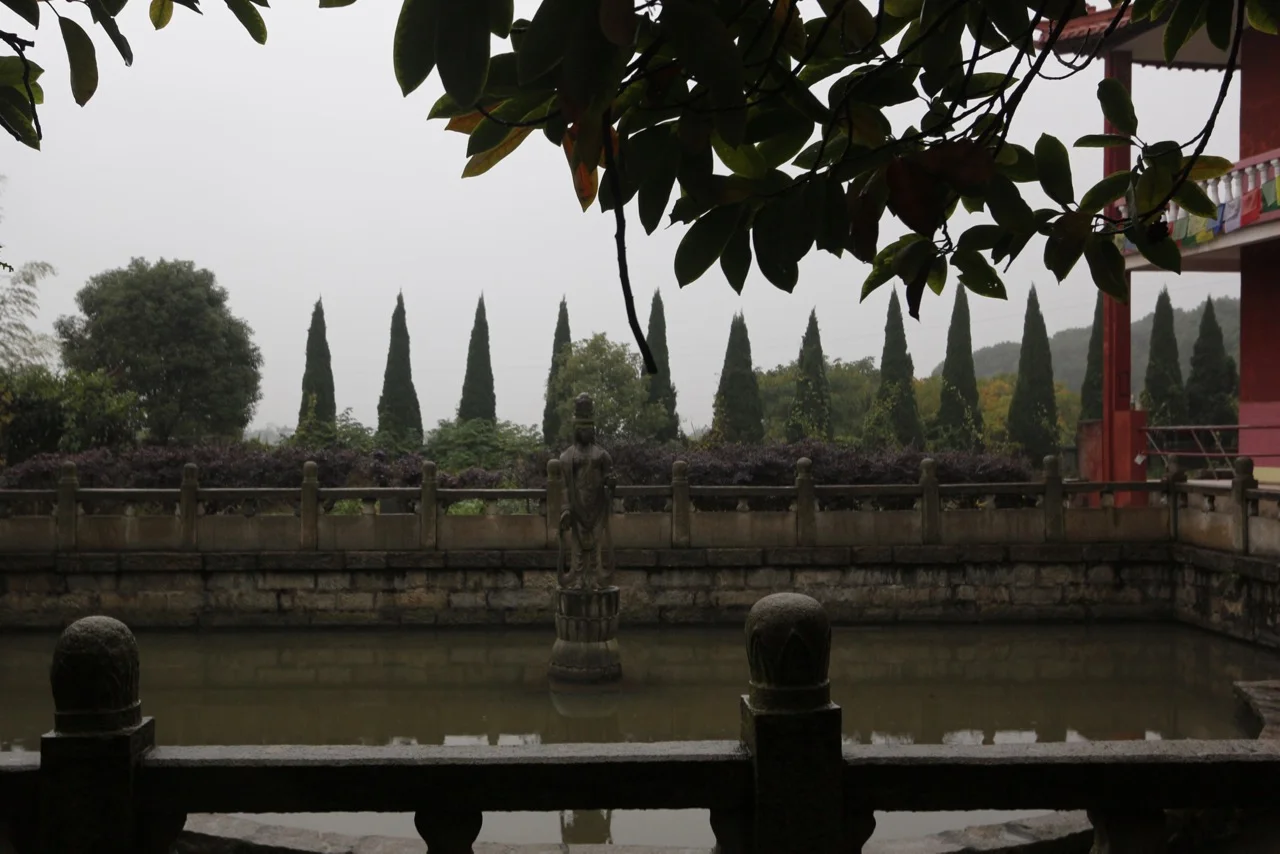


Xilinsi means Western Forest Temple and is the “sister” temple to the Donglinsi, which means Eastern Forest Temple. These temples were founded by two “brother” monastics. It is striking to see the difference between the two. One is expanding, building massive halls, while the other appears frozen in time but also is a place of peaceful refuge.


Xiangdao, Lushan, Jiujiang, Jiangxi
11/7 Eastern Forest Temple - Pureland


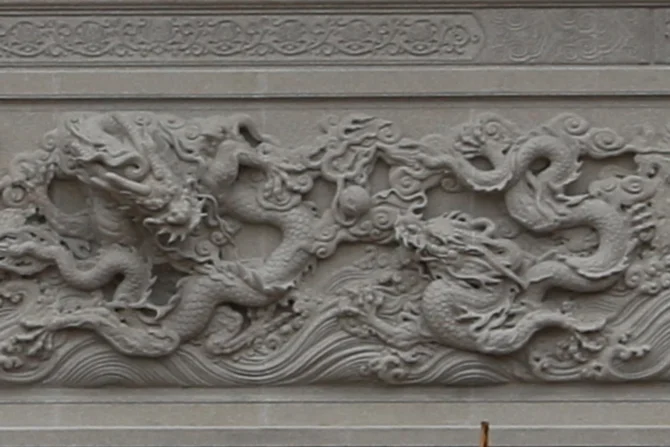
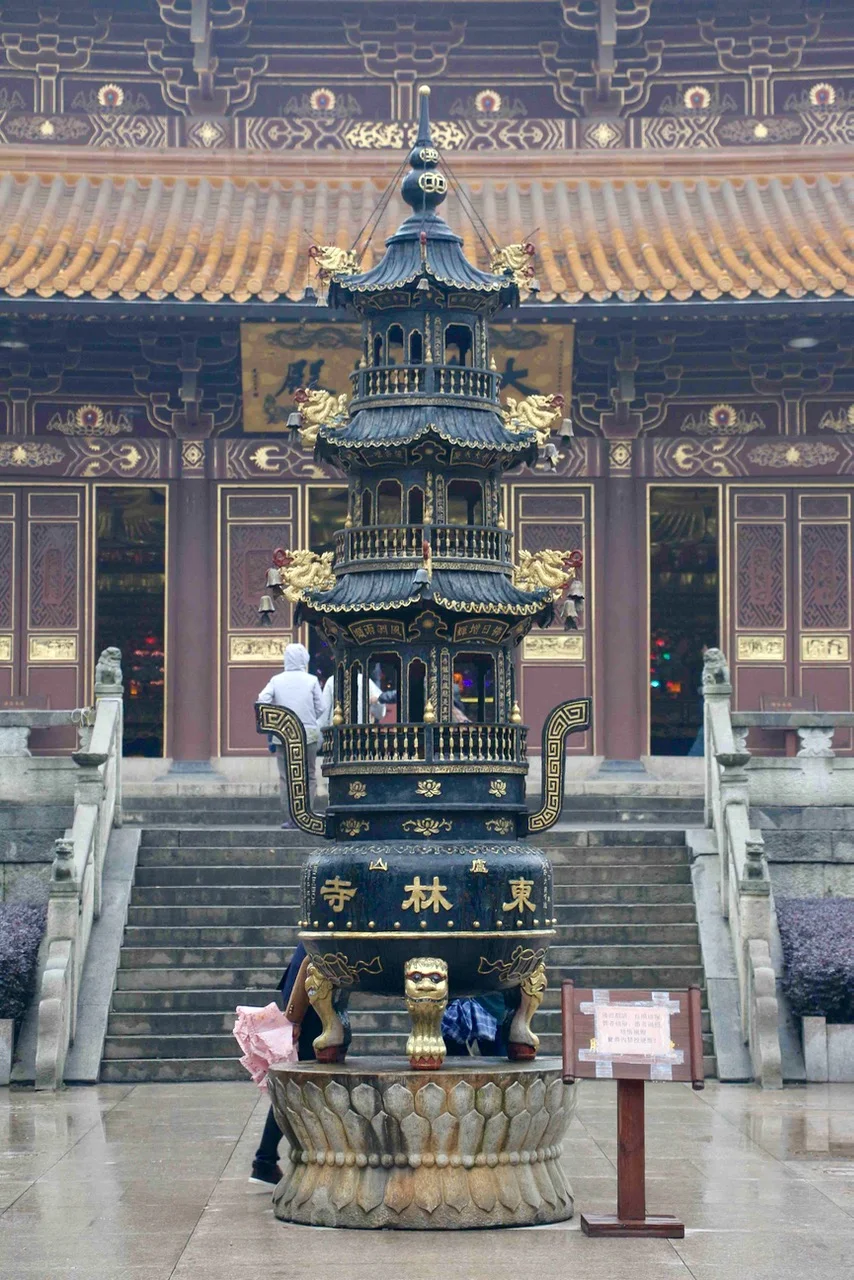
東林寺/Donglinsi (Dong=East, Lin=Forest) was founded by Pure Land Buddhist Master HuiYuan in 384 AD. Master HuiYuang understood Sanskrit and was very important in creating many Buddhist literatures.
In Tang Dynasty, Master Jianzhen came to Donglinsi to practice. He later brought Pure Land Buddhism to Japan. on his sixth trip to the country. Not unexpected, lots of Japanese come visit here.


Walking into the temple complex, all I could see was construction everywhere, from no-nail wooden beams to concrete structures. It was only when far inside the back did I see the main temples. This is a very big temple complex and it has a sister Donglin temple which we will visit the following day.




Donglinsi, Lushan, Jiujiang, Jiangxi, China
11/7 Temple of the Chan/Zen's Fifth Patriarch

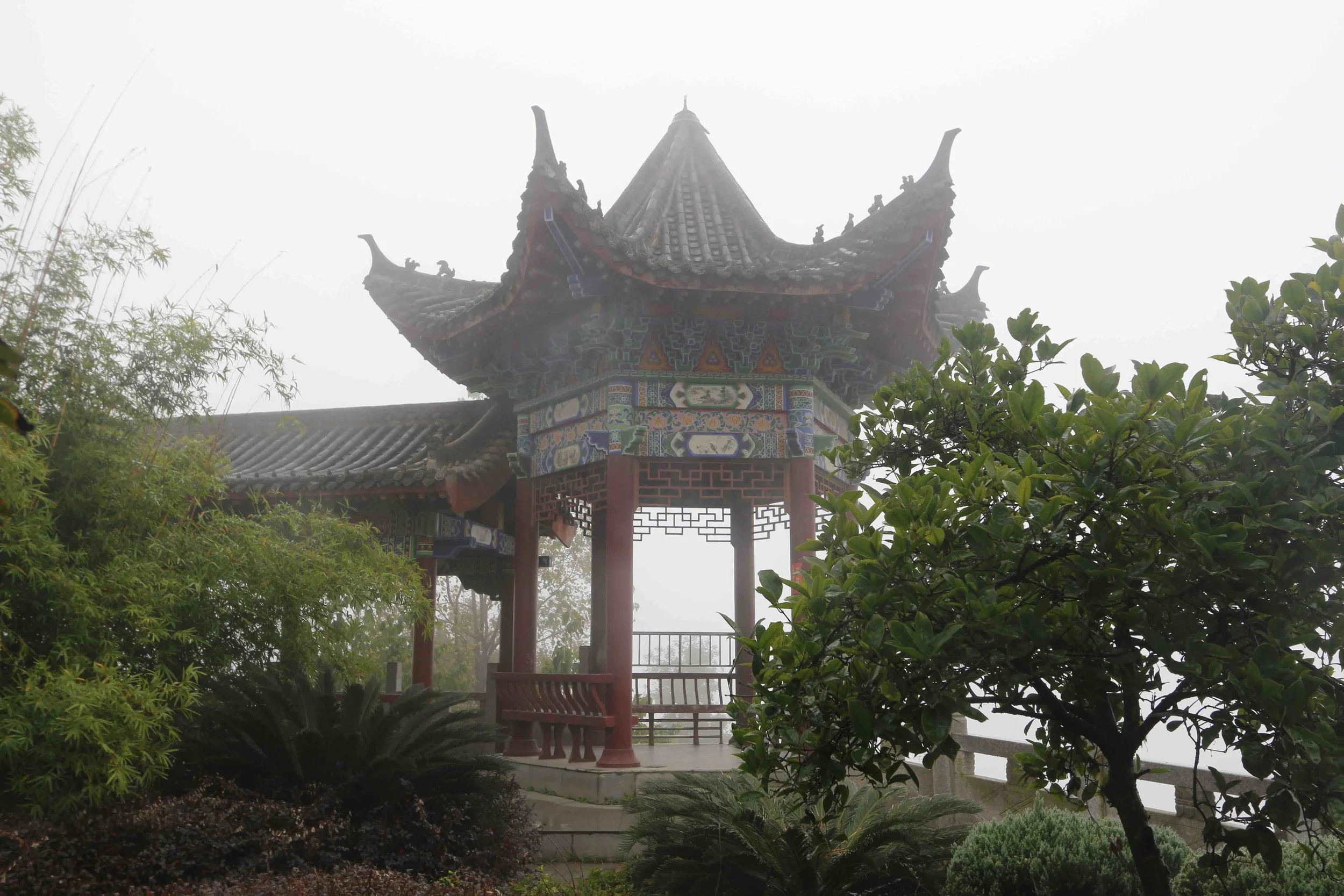
This is the Chan/Zen fith patriarch’s temple, Wuzusi /五祖寺. Literal translation is Firth Patriarch Temple. Built in 654 AD and formally known as Dongshanshi, or Easter Mountain Temple. The fifth patriarch was known as Master HongRen. Master HongRen recognized that one of the most junior monastic was the most well practiced and gifted to receive the next patriarch designation. To ensure that the Sixth Patriarch, as one of the most junior, be able to continue to pass down the Chan/Zen teaching, Master HongRen requested the Sixth Patriarch to run away in the midde of the night.




Wuzu, Huangmei, Hubei, China
11/7 The Beginning (New) of the Chan Monastic Practice


This is the Chan/Zen fourth patriarch’s temple, Sizusi /四祖寺. SiZuSi (Si=Fourth, Zu=Patriarch, Si=Temple) was founded in 624 AD. SiZu or Master Daoxin taught Buddhism here for nearly thirty years and had around 500 disciples. He began the monastic community practice and promoted "Equal Emphasis in Sitting and Working" which was a change from the earlier Alms Begging practice. On another note, one of his disciples, Xinglu Falang became the founder of Korean Chan/Zen or Seon.
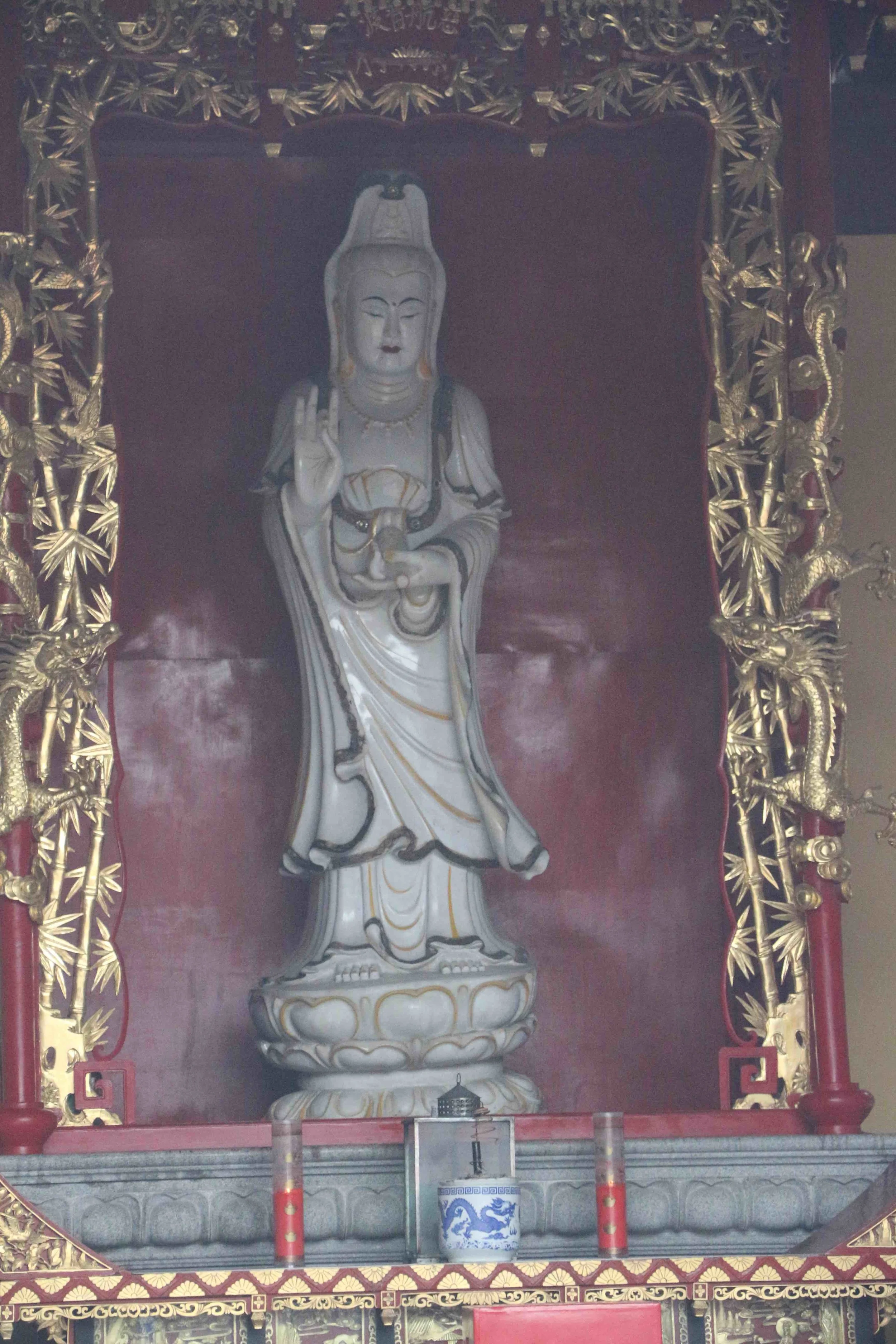


Above pics of the Temple Gate are Avalokitesvara Bodhisattva in the center flanked by two protective Vajra Lords, General Hen and General Ha.


Notice some of the external walls are painted with the green colors; they remind me a lot of the Korean temples that I visited. I could not take pictures of the Buddhas in the main hall so I took a picture of the 'description', The tree picture shown below is over one thousand years old.
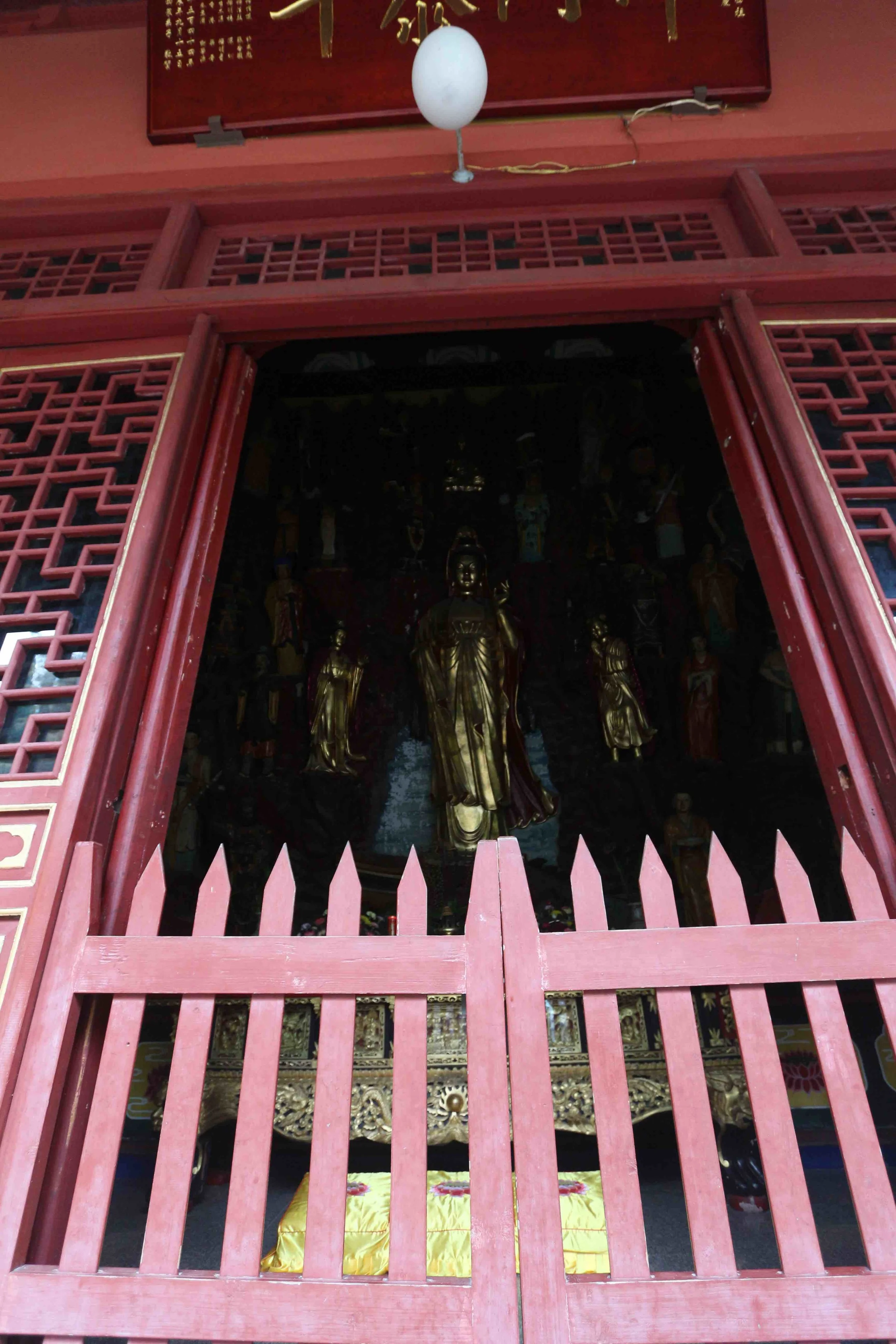


Sizusi, Dahe, Huangmei, Hubei, China
11/6 Temple of the Chan/Zen's Second Patriarch

See the lion behind the temple?
The temple Erzusi二祖寺, named after Master Erzu (Er=2 and Zu=Patriarch), also known as Master Huike, is located in Sikongshan, the mountain known as the origin of Zen in China. Master Master Erzu, who lived from 487-593 AD, went way up in the mountains to build this temple due to wars and turmoil. To show his sincerity that he wanted to become Bodhidharma’s student, Master Huike cut off his left arm.


Sikongshan, Dianqian, Yuexi, Anhui, China

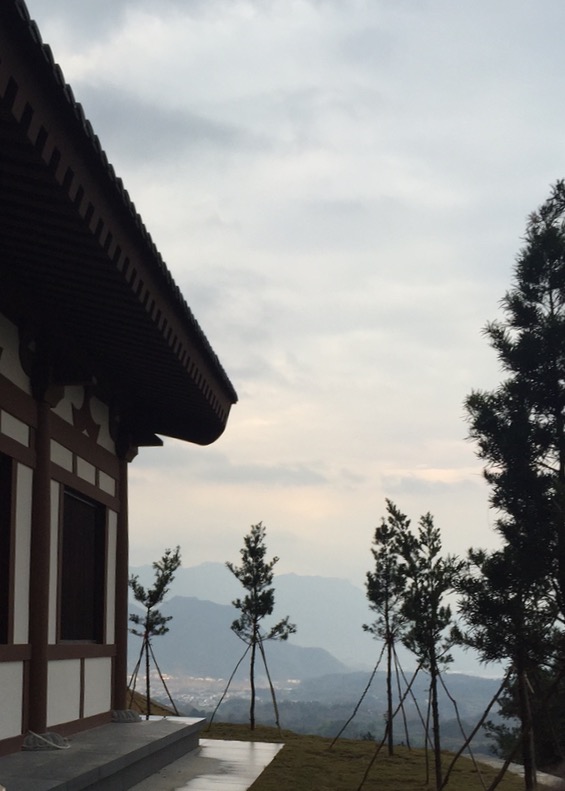
11/6 Temple of the Chan/Zen's Third Patriarch

This is the Chan/Zen Third Patriarch’s temple Sanzusi /三祖寺. The temple was first built in 505 AD during the Northern & Southern Dynasties, but it later got its current name from Master Sanzu (San=Third, Zu=Patriarch/Founder), who arrived at this temple at 590 AD and taught during the Sui Dynasty (581-618 AD). He exited this world at 606 AD and his relics are stored in the pagodas toward the back of the temple.


The rock with writings on it is where the Third Patriarch passed down the “YiBuo” line, or Dharma succession where the symbolic robe and bowl were passed down to the Fourth Patriarch. These were a physical objects that symbolize the transmission.
When the Fourth Patriarch, Master SiZu (Si=Fourth), was still a novice monk, he asked the Third Patriarch for help. The young monk said that my heart/mind is tied down, can you help me? Master SanZu said, “I can help you, please show me the rope that is tying you down and I will untie it for you.” The young monk said, “But I can’t find the rope that ties me down.” Master SanZu then stated, “I have untied that which holds your mind, from now on, no one or anything can tie you down.” The young monk, Master SiZu, realized that all vexations are in one’s own mind.


The pagoda was built around 700 AD and the surrounding rectangular building below the pagoda was added during the Ming and Qing (Ch'ing) Dynasties, between 1368-1912 AD.


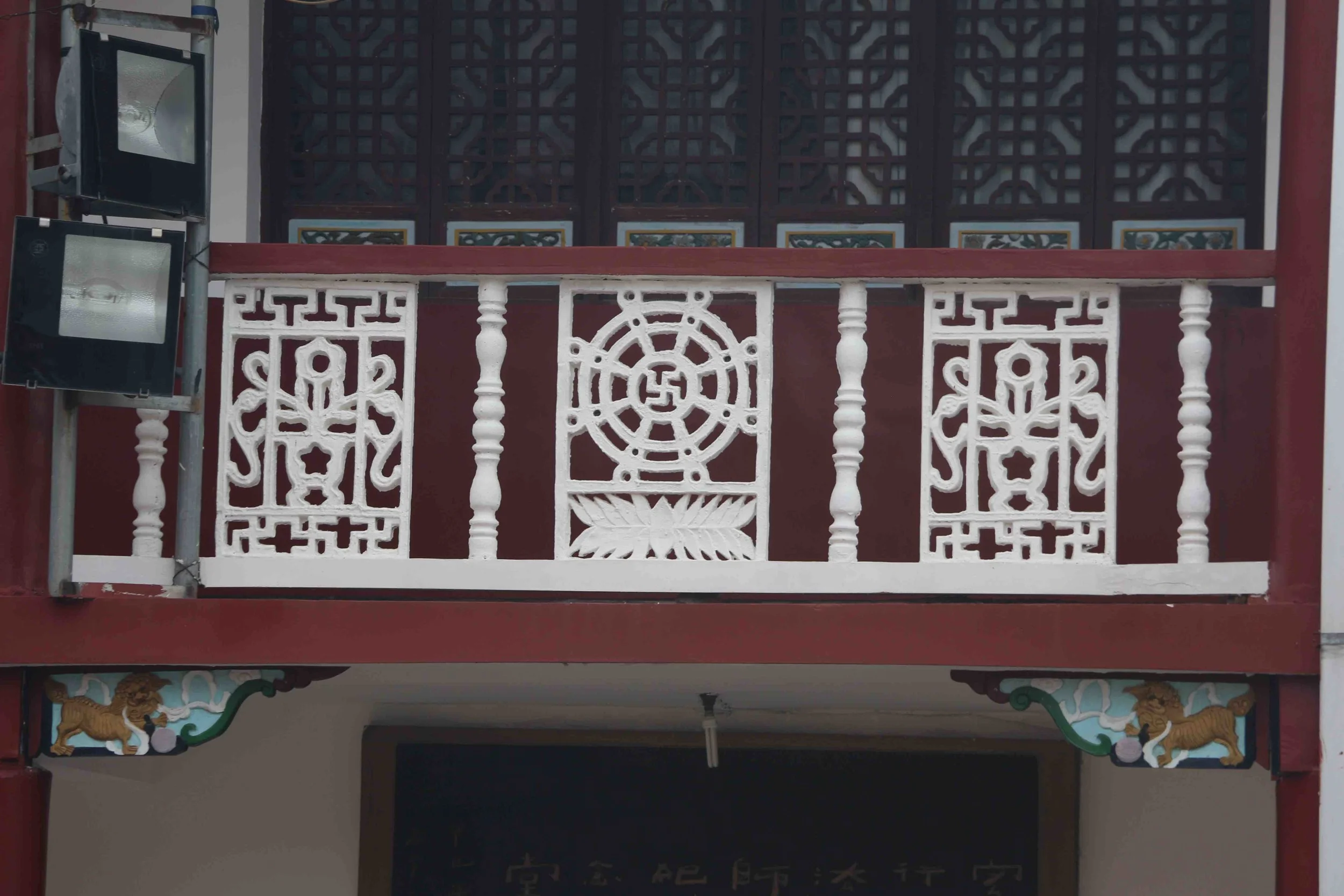




Sanzuchansi, Qianshan, Anhui, China
11/5 Mt. Jiuhua - Sacred Mountain Dedicated to Ksitigarbha / DiZang Pusa
JiuhuaShan (Mt. Jiuhua) is one of four sacred mountains in China. dedicated to Ksitigarbha or Dizhang Pusa. While there already were Buddhist temples and Indian priests leading the temples by around 400AD, at 757AD there was a zen master, formally a Silla prince named Kim Gyo-gak, practicing in a small mountain cave eating small amount of rice and mud.
After the locals discovered this zen/chan master, within a short period of time the people built a temple and invited the master to teach. He stayed at this mountain and taught for 75 years till age of 99. After his death, his corporeal body remained intact and was on display until circumstance deemed it necessary to hide his body, during the Tang Dynasty (1000+ years ago). By Ming Dynasty (300-700 years ago) they built a temple over the location of where the body is hidden. People believed that he is the reincarnate of Dìzàng Pusa, (Japanese: Jizo, Sanskrit Ksitigarbha)


We went up a cable car and up the steps we climbed and climbed.


At this time there are approximately 99 temples on this mountain, but historically there were up to 300. TienTaiSi (天台 Temple) is our first destination. It was built next to the cave where Dizang Bodhisattva practiced.


Lots of steps to reach the temple. Some people prayed as they went up the steps...


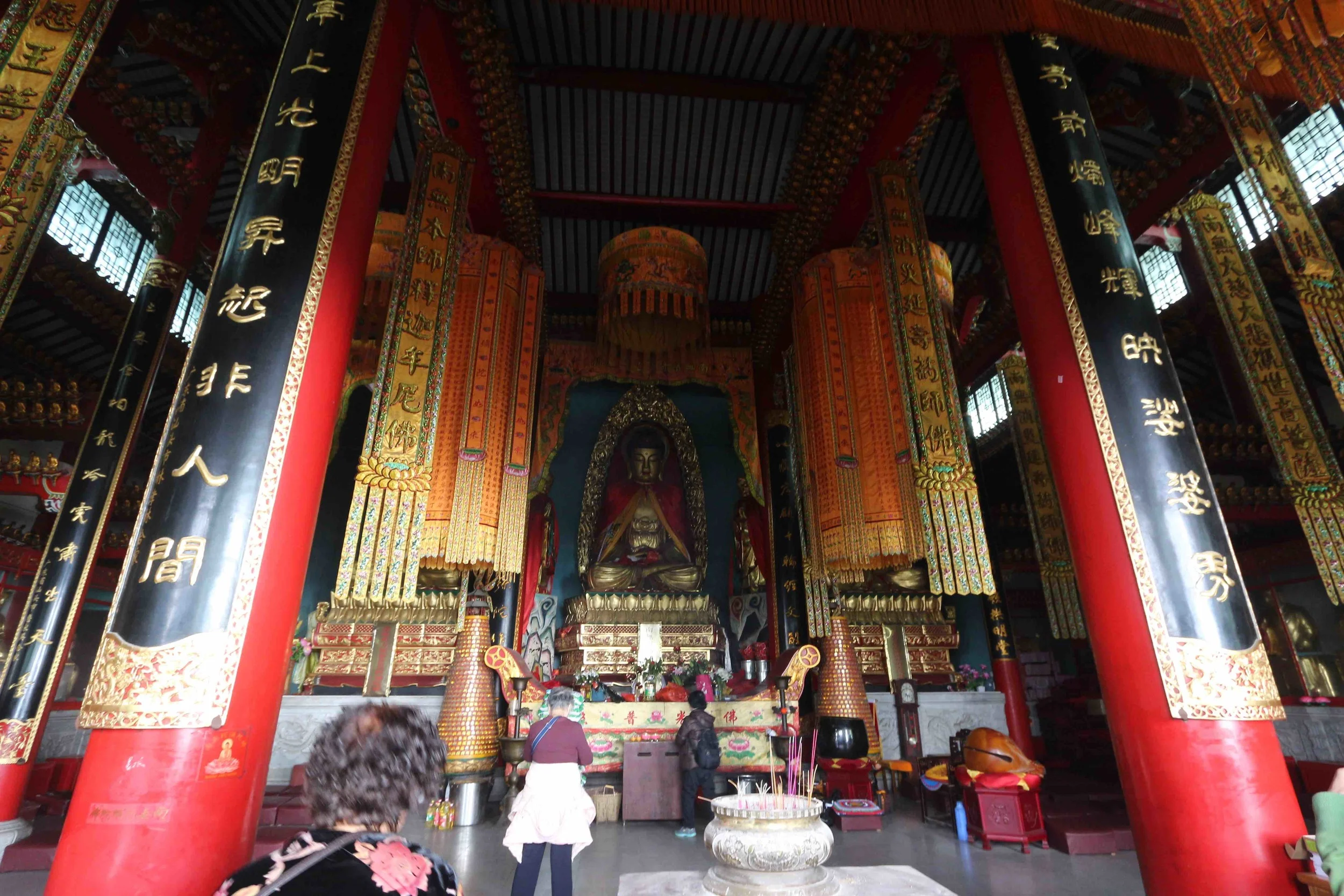


We've arrived at the cave where Dizang Pusa meditated.

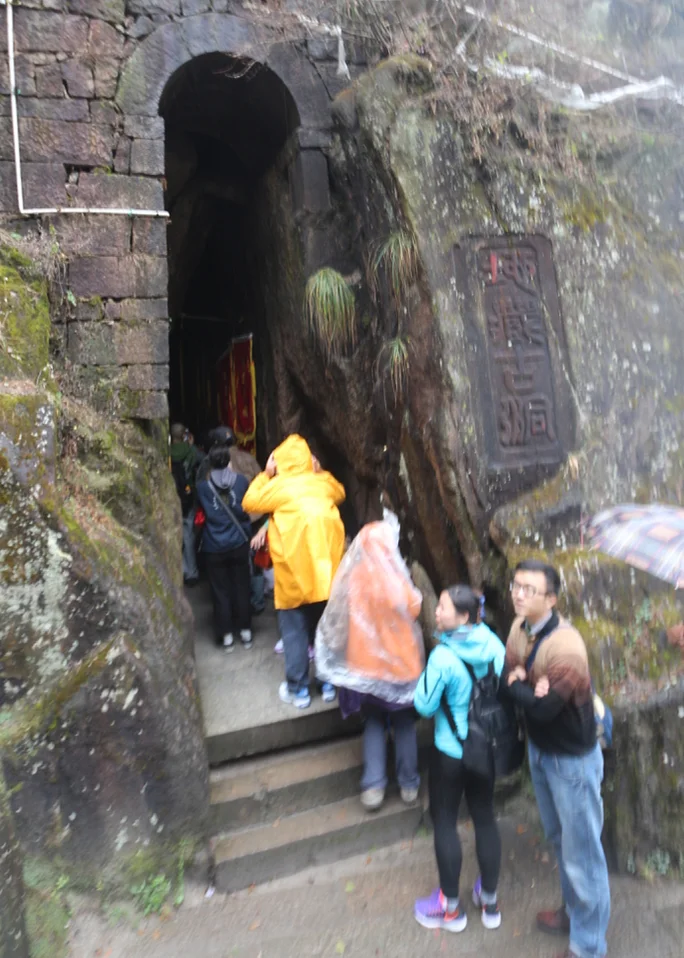
After leaving the mountain peak we went to the temple where his body is enshrined, RouShenSi.


The next temple we visited on Mt Jiuhua was Hauchengsi (化城寺). It was a leading temples in Mt.Jiuhua and Dizang Pusa is said to have lived here. At its peak in Qing Dynasty (100-300 years ago), there were three to four thousand monks living there. This temple also houses a library including Buddhist texts from India.


Due to the Cultural Revolution, the majority of the temple had to be rebuilt. This is a recurring theme as I visited many of the ancient Chinese temples, which is very similar to my prior visit to see ancient Korean temples. There nearly all the ancient temples I visited were destroyed in 1592 when the Japanese invaded Korea on their attempt to invade Ming Dynasty China.
11/4 Brand New Temple on Grounds of an Ancient One

DingShanSi was originally built around the time of Bodhidharma (28th patriarch of Buddhism and 1st patriarch of Chan/Zen starting in China). Only remnants of the temple were rediscovered recently. They believe that DingShanSi was where Bodhidharma had settled for a couple of years prior to going to Shaolin Temple.
They have completed the main hall based on traditional Tang Dynasty architecture and aesthetics. They are in process to build out the remaining temple complex, also in Tang style.


I have always been curious about the people dedicating their lives to serve the community. While speaking with a young monastic at the temple, I learned that he was a professor of mechanical engineering for two years and had spent many years studying in Tennessee. Monastic lifestyle, especially here is a long way to what we’re accustomed to in US.

11/4 Temple with Buddha’s Relic


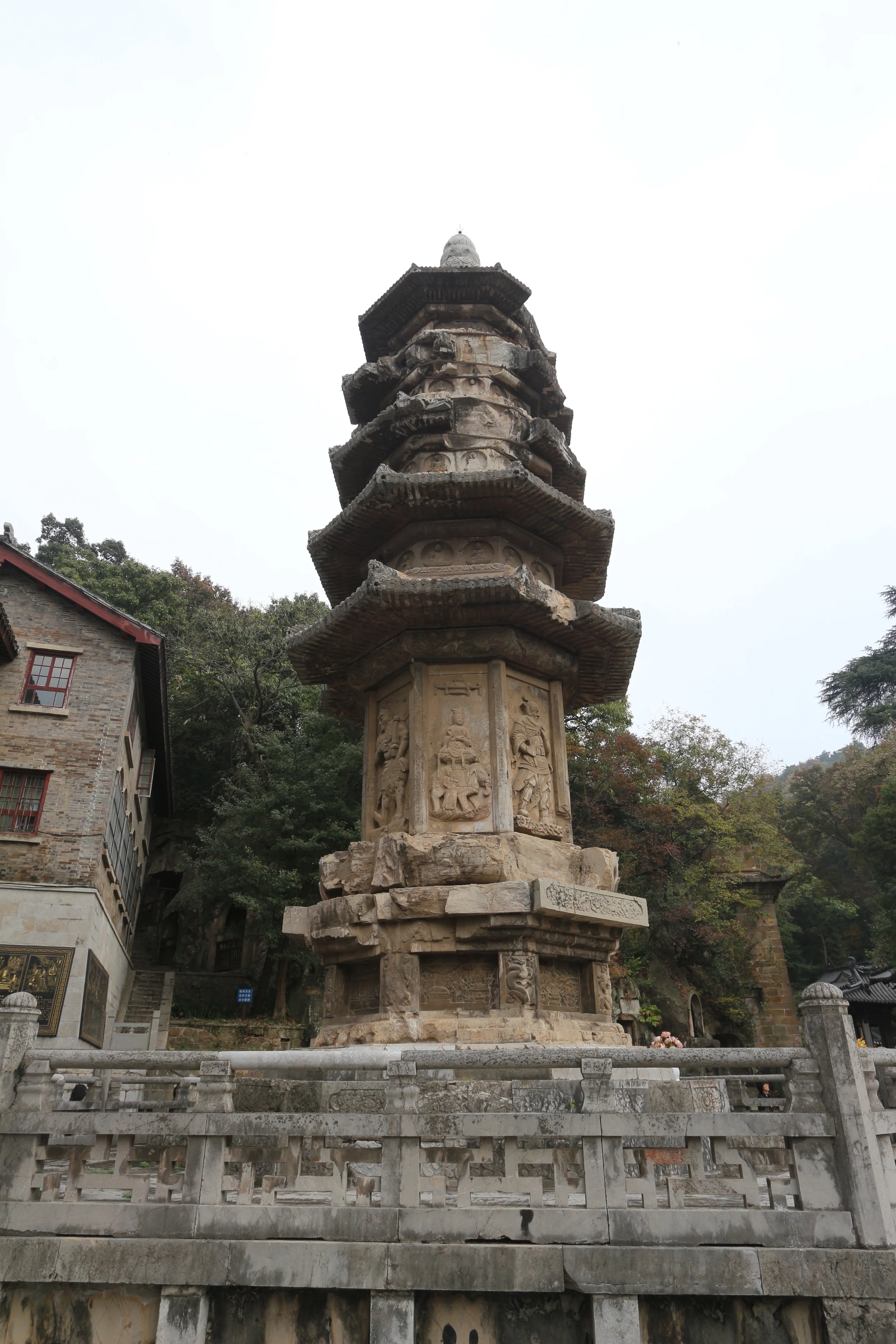
QiXiaSi (栖霞寺) was first built in 489 and known to be one of the four most famous temples in China. It features the Buddha's Relics Pagoda in the southeast of Qixia Temple and houses a large collection of Chinese Buddhist art.

The pagoda containing Budddha’s relics is the original from the Sui dynasty contains Buddha’s relics. Some of the damages to the pagoda are due to natural wear while others are due to cultural revolution.

The Amitaba statue pictured, made during the Ming dynasty, was stolen by the Japanese during their invasion. Then it was purchased back and returned back to this temple. Would it have survived the Cultural Revolution?


This temple also houses a Buddhist divinity school but has less than a hundred students. A resident monastic feels that this is due to the one child policy in China, but recently changed to two.


Longchangsi, Baohuashan, Jurong, Jiangsu, China
11/4 Historic Ordination Platform - Temple
宝华山 隆昌律寺/Baohuashan Longchanglusi
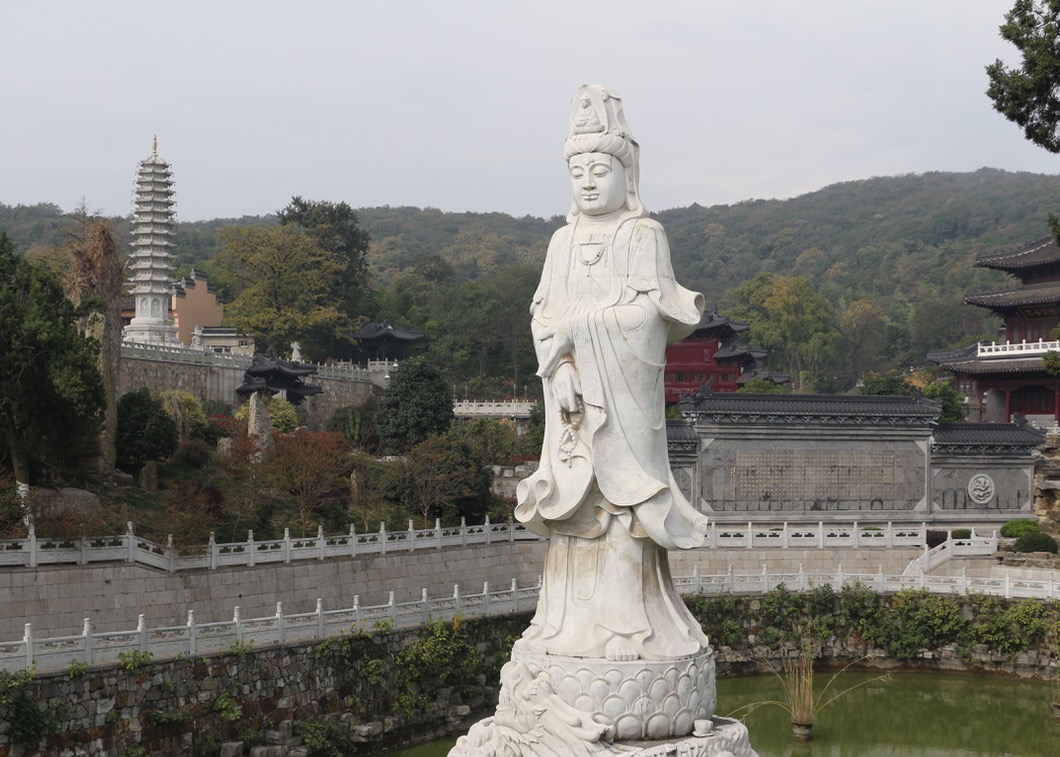
Felt like I was backpacking in Korea visiting ancient Buddhist temples again. There is a large white Avaloksittvara statue close to the entrance of this temple LongChangSi. From the temples I visited in Korea, many also had large white Buddha or Boddhisattva statues by the entrance.

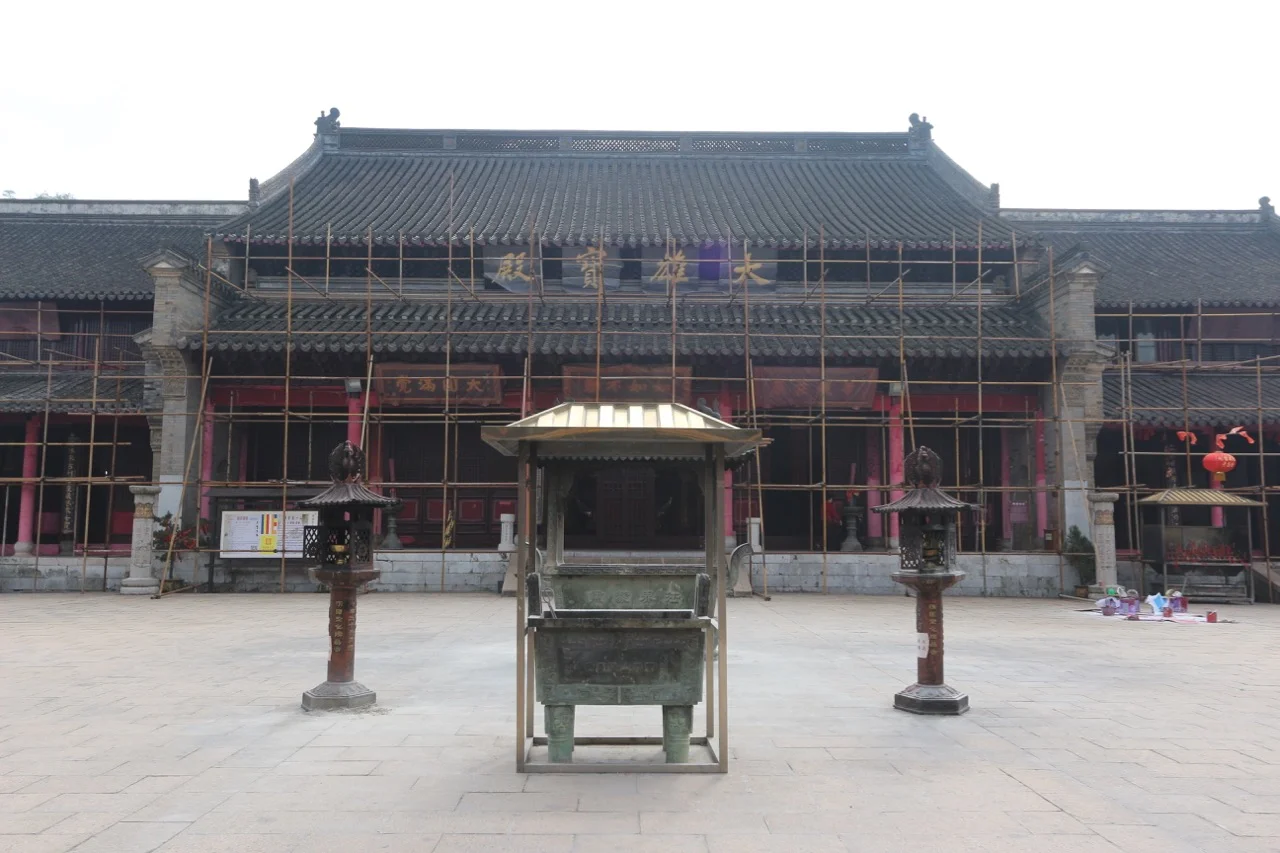


BaoZhi monk founded the LongChangSi over 1500 years ago and at around that period it was considered one of top Vinaya schools from the 480 Sanskrit temples in this area. This temple became more well known when the abbot was requested to ordain the Emperor Shizong of Qing Dynasty approximately 300 years ago.


A famous one thousand years old ordination platform resides at this temple. It’s been “remodeled” during the Qing Dynasty, a few centuries back. It’s one of four in China but considered the most important with monastics coming from as far as India, Thailand, and Japan to perform their ordination.


The pond in the first picture below the statue is an animal release pond, for turtles and fish originally meant for human consumption.
Longchangsi, Baohuashan, Jurong, Jiangsu, China
11/3 Temple of childhood fables & Grand Prayer - JinShangSi
JinShanSi, 金山寺, was built over 1600 years ago. It was incorporated into an ageless Chinese fable, Legends of the White Snake some times ago.
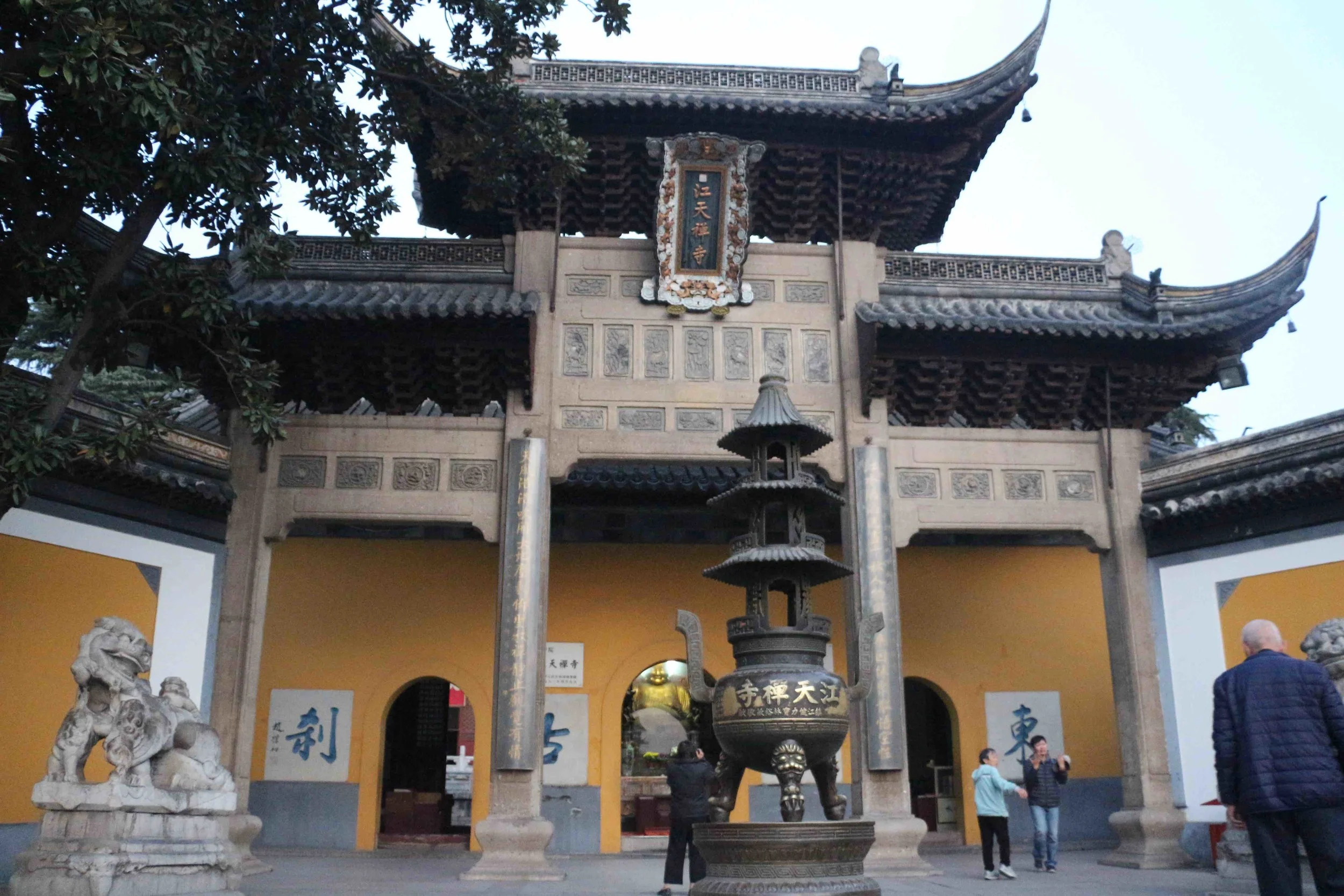


A White Snake spirit benefited greatly through an accidental and innocent act of a boy called Xu. Eighteen years later while in her human guise, fate brings them together and they fell in love, married and had a son. A jealous Turtle spirit witnessed and plotted his sabotage. While in human guise this Turtle spirit impersonated a JinShanSi Buddhist monk, revealed the true nature of the White Snake to her husband Xu and then eventually imprisoned her in a pagoda in JinShanSi. But love and perseverance prevailed, White Snake was freed and reunited with her family; the Turtle spirit fled.


But more importantly, 1500 years ago Emperor Wu Di of Liang (considered by some as the Ashoka of China) helped to establish an annual prayer that is called The Grand Prayer (and many variant names like Liberation of Rite of Water and Land), which is practiced today and it all started at JinShanSi. This prayer is considered as one of the greatest and most powerful and its goal is to invite sentient beings to help other sentient beings less fortunate, from across the realms.
No.62 Jinshan Rd, Runzhou, Zhenjiang, Jiangsu, China